
Need Emergency Sewer Backup Help in Detroit?
A sewer backup can quickly turn into major water damage, foul odors, and dangerous contamination inside your home. Fast emergency service can help stop the damage before it spreads.
Call Now: 844-423-0056

A sewer backup is one of the worst plumbing problems a homeowner can face. It usually happens without much warning, and when sewage water starts backing up into a basement, shower, or floor drain, every minute matters.
If you are dealing with an emergency sewer backup Detroit MI situation, acting fast can help reduce structural damage, prevent mold growth, and protect your home from expensive repairs.
In Detroit and surrounding areas like Dearborn, Redford, Southfield, Livonia, and Highland Park, sewer backups are more common than many homeowners realize. Older sewer lines, heavy rainstorms, tree root intrusion, and aging plumbing systems all contribute to emergency drain issues throughout Southeast Michigan.
The good news is there are a few important steps you can take immediately before the damage gets worse.
1. Stop Using Water Immediately
The first thing you need to do is stop all water use inside the property.
Do not:
- Flush toilets
- Run sinks
- Use the washing machine
- Take showers
- Run the dishwasher
Every drain in your home connects to the main sewer line. If the sewer line is clogged or backing up, continuing to use water can force even more sewage back into the house.
Many Detroit homeowners make the mistake of trying to “flush the clog through.” That almost always makes the backup worse.
If multiple drains are backing up at once, that is usually a sign the main sewer line is blocked.
2. Keep People and Pets Away From the Area
Sewer water is not clean water.
It can contain:
- Bacteria
- Viruses
- Waste contamination
- Chemicals
- Mold spores
If sewage water has entered your basement or lower level, keep children and pets away from the affected area immediately.
Avoid walking through contaminated water unless absolutely necessary. If you must enter the area, wear gloves and waterproof boots.
A lot of homeowners in Detroit try to clean sewer backups themselves without realizing how hazardous raw sewage exposure can be.
3. Turn Off Electricity If Water Levels Are Rising
If standing water is approaching electrical outlets, appliances, or the breaker panel, turn off electricity to the affected area if it is safe to do so.
Water and electricity are a dangerous combination.
Do not step into standing water to reach electrical equipment. If conditions are unsafe, wait for professionals.
Basement sewer backups in older Detroit homes often involve water near furnaces, water heaters, and electrical systems, especially during heavy storms.
4. Identify the Signs of a Main Sewer Line Backup
Sometimes homeowners are not sure whether they are dealing with a simple drain clog or a larger sewer problem.
Here are common signs of a main sewer line backup:
- Multiple drains backing up at once
- Basement floor drain overflow
- Toilet bubbling or gurgling
- Sewage odors inside the home
- Water backing up into tubs or showers
- Slow drains throughout the house
- Backup becomes worse after flushing
If you notice these symptoms, there is a strong chance the main sewer line needs immediate professional cleaning or inspection.
Many older neighborhoods throughout Detroit still have aging clay sewer pipes that are highly vulnerable to tree root intrusion and collapse.
5. Try To Contain the Damage
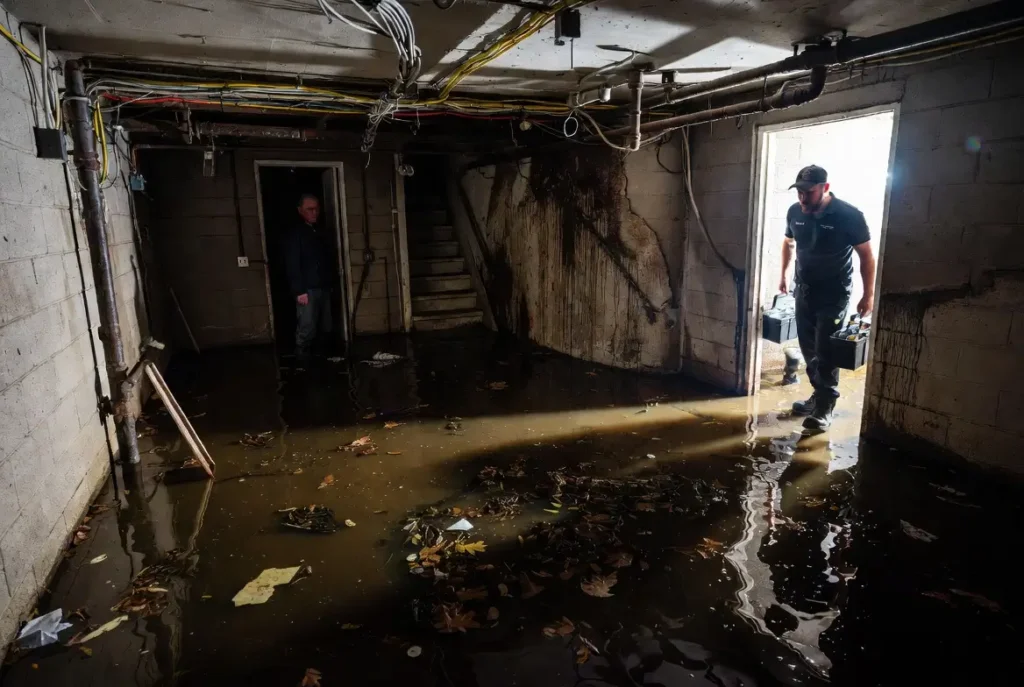
If possible, remove nearby items before sewage water spreads further.
Move:
- Furniture
- Cardboard boxes
- Rugs
- Electronics
- Storage containers
Water damage spreads quickly through drywall, wood framing, carpeting, and flooring materials.
Even a small sewer backup can create major restoration costs if left untreated for too long.
Detroit basements are especially vulnerable because many homes have partially finished lower levels, stored belongings, and older floor drain systems.
6. Do Not Use Chemical Drain Cleaners
This is a major mistake.
Chemical drain cleaners rarely solve a true sewer line blockage. In fact, they often create additional problems.
Harsh chemicals can:
- Damage old pipes
- Corrode plumbing systems
- Create toxic fumes
- Make professional repairs more difficult
If the blockage involves tree roots, collapsed piping, or heavy buildup, drain cleaners will not fix the issue anyway.
Professional sewer cleaning equipment is usually required for emergency sewer backup situations.
7. Common Causes of Sewer Backups in Detroit
There are several reasons sewer backups happen in Southeast Michigan.
Tree Root Intrusion
Tree roots are one of the biggest causes of sewer line clogs in Detroit.
Roots naturally search for moisture and often break into older clay or cast iron sewer pipes through tiny cracks.
Once roots enter the line, they expand and trap waste, paper, grease, and debris until the line eventually blocks completely.
Heavy Rain and Storm Flooding
Detroit sewer systems can become overwhelmed during major storms.
Heavy rainfall can overload municipal systems and force sewage back into residential drain systems.
Homes without proper backwater valves are especially vulnerable during flash flooding events.
Grease and Waste Buildup
Grease buildup is extremely common.
Cooking oils, food waste, wipes, paper towels, and hygiene products slowly narrow sewer lines over time.
Eventually the blockage becomes severe enough to stop wastewater flow entirely.
Collapsed or Aging Sewer Pipes
Many Detroit-area homes still have sewer lines that are several decades old.
Over time pipes can:
- Crack
- Shift
- Collapse
- Corrode
- Separate underground
Once structural damage occurs, recurring backups become very likely.
8. Why Fast Emergency Service Matters
A sewer backup is not something to delay.
Waiting too long can lead to:
- Mold growth
- Structural damage
- Ruined flooring
- Foundation moisture problems
- Electrical hazards
- Contaminated air quality
The longer sewage sits inside a home, the more difficult and expensive cleanup becomes.
Emergency sewer cleaning companies can often identify the problem quickly using:
- Drain snaking
- Hydro jetting
- Sewer camera inspections
- Root cutting equipment
If caught early enough, many sewer line issues can be cleared before major repairs are needed.
You can also learn more about professional sewer and drain solutions on our sewer and drain service page.
9. Preventing Future Sewer Backups
Once the emergency is resolved, prevention becomes important.
Here are some ways homeowners in Detroit can reduce future sewer problems.
Schedule Routine Drain Cleaning
Routine sewer maintenance helps remove buildup before major blockages occur.
Homes with older plumbing systems benefit from periodic inspections and cleaning.
Avoid Flushing Wipes
Even “flushable” wipes create sewer problems.
Only toilet paper should go down toilets.
Install a Backwater Valve
Backwater valves help prevent sewage from flowing backward into your home during city sewer overload situations.
This can be especially valuable in flood-prone Detroit neighborhoods.
Address Slow Drains Early
Small warning signs often appear before a full backup happens.
Do not ignore:
- Gurgling drains
- Slow sinks
- Sewer odors
- Basement drain backups
Catching problems early can prevent a much larger emergency later.
10. Emergency Sewer Backups Can Escalate Fast
One of the biggest mistakes homeowners make is waiting until morning or “seeing if it clears itself.”
Sewer problems rarely improve on their own.
What starts as a slow basement drain can quickly become:
- Sewage flooding
- Property damage
- Mold contamination
- Expensive restoration work
Detroit homeowners dealing with sewer backups need fast action before contamination spreads throughout the property.
The sooner the blockage is identified, the better the chances of minimizing damage and avoiding major repair costs.
Emergency Sewer Backup Detroit MI
If sewage is backing up into your basement, drains, or plumbing fixtures, fast professional service can help stop the damage before it gets worse. Emergency sewer cleaning and drain inspections can identify the cause quickly.
Call Now: 844-423-0056