
Few household problems are as stressful as a sewer backup.
One minute everything seems normal. The next, dirty water is coming up through a basement floor drain, toilet, sink, or bathtub. The smell alone is enough to cause panic.

If this happens in your home, try not to panic. Taking the right steps immediately can help protect your family, reduce property damage, and make cleanup easier.
Knowing what to do first during a sewer backup can make a major difference.
What Is a Sewer Backup?
A sewer backup happens when wastewater cannot properly leave your home through the sewer line.
Instead of flowing away from the house, sewage reverses direction and comes back through your plumbing fixtures.
Sewer backups can involve:
- Toilets
- Bathtubs
- Showers
- Basement floor drains
- Utility sinks
- Bathroom sinks
- Kitchen sinks
Because sewage contains harmful bacteria and contaminants, it should always be treated as an emergency.
Why Sewer Backups Happen
Several problems can cause sewage to back up into your home.
Common causes include:
Tree Root Intrusion
Tree roots naturally seek moisture.
Even tiny cracks in sewer pipes can attract roots. Over time, roots grow inside the line and create serious blockages.
Grease Buildup
Grease poured down drains may harden inside pipes.
Eventually, it can restrict wastewater flow.
Flushed Items
Many items labeled as “flushable” don’t break down properly.
Common culprits include:
- Baby wipes
- Cleaning wipes
- Paper towels
- Feminine hygiene products
- Cotton swabs
Broken Sewer Pipes
Older sewer lines can crack, collapse, or shift underground.
This damage prevents sewage from flowing properly.
Heavy Rainfall
During major storms, municipal sewer systems can become overwhelmed.
In some cases, excess water can contribute to backups.
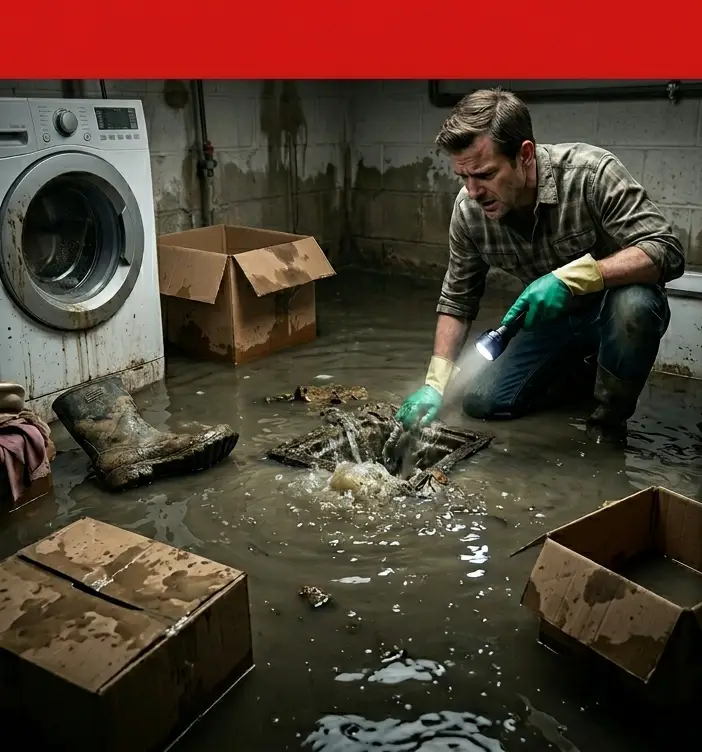
What To Do First During a Sewer Backup
The first few minutes matter.
Follow these steps immediately.
Stop Using Water
This is the most important thing you can do.
Do not:
- Flush toilets
- Run sinks
- Use showers
- Start the dishwasher
- Do laundry
Any additional water entering your plumbing system may make the backup worse.
Every gallon of water used inside the house can add to the overflow.
Keep Family Members Away
Sewage contains harmful microorganisms.
Exposure can create health risks.
Keep:
- Children away from affected areas
- Pets out of contaminated spaces
- Family members from walking through sewage
If possible, close doors leading to the affected area.
Turn Off Electricity If Necessary
Water and electricity are a dangerous combination.
If sewage is approaching:
- Electrical outlets
- Appliances
- Extension cords
- Your electrical panel
Turn off power to the affected area if it can be done safely.
If you cannot safely access the breaker panel, leave the area and wait for professionals.
Never stand in contaminated water while touching electrical equipment.
Identify Where the Backup Is Coming From
Try to determine which fixtures are affected.
Ask yourself:
- Is the problem only in one bathroom?
- Is sewage coming through the basement floor drain?
- Are multiple drains backing up?
- Is the toilet overflowing?
Multiple affected fixtures often point to a main sewer line blockage.
This information can help your plumber diagnose the issue faster.
Avoid Using Chemical Drain Cleaners
Many homeowners reach for drain cleaners during plumbing emergencies.
This is usually not a good idea.
Chemical products can:
- Damage pipes
- Create dangerous fumes
- Cause burns
- Make professional repairs more difficult
Sewer backups typically involve larger problems that chemicals cannot solve.
Protect Valuable Items
If sewage is entering a basement or lower level, move valuable belongings to a dry area.
Remove items such as:
- Boxes
- Electronics
- Furniture
- Rugs
- Important documents
- Family keepsakes
The sooner items are moved, the better the chance of saving them.
Document the Damage
Take photos and videos before cleanup begins.
Document:
- Standing sewage
- Damaged belongings
- Water levels
- Affected rooms
This documentation may be useful if you need to file an insurance claim.
Keep a list of damaged items as well.
Call a Professional Plumber
Most sewer backups require professional help.
Once immediate safety measures have been taken, contact an experienced plumber.
A professional can identify the cause and recommend the proper repair.
Waiting too long can allow the problem to worsen.
How Plumbers Diagnose Sewer Backups
Modern plumbing technology makes diagnosing sewer issues much more accurate.
Several methods may be used.
Sewer Camera Inspections
A small waterproof camera is inserted into the sewer line.
This allows plumbers to see exactly what’s happening underground.
Camera inspections can reveal:
- Tree roots
- Cracked pipes
- Collapsed sections
- Grease buildup
- Offset joints
- Foreign objects
Rather than guessing, plumbers can provide targeted solutions.
Drain Cleaning Equipment
Professional tools can remove stubborn blockages.
Depending on the situation, plumbers may use:
- Mechanical augers
- Root cutting equipment
- Hydro jetting systems
Each method is designed to restore proper flow.
Common Repairs After Sewer Backups
The necessary repair depends on the cause.
Root Removal
If tree roots are blocking the line, specialized equipment can cut them away.
Hydro Jetting
High-pressure water can clear grease, sludge, and debris from sewer pipes.
Spot Repairs
Damaged sections of pipe may be excavated and replaced.
Trenchless Sewer Repair
In some situations, plumbers can repair sewer lines with minimal digging.
Full Sewer Replacement
Older or severely damaged systems sometimes require complete replacement.
Your plumber can explain which option makes the most sense.
Can You Clean Up Sewage Yourself?
Small cleanups may be possible in limited situations.
However, extensive sewer backups should often be handled by restoration professionals.
Professional cleanup teams have specialized equipment designed to safely remove contamination.
Improper cleanup can expose homeowners to bacteria and lingering odors.
Signs You Should Call Immediately
Some situations require urgent attention.
Call a professional right away if you notice:
- Sewage coming from multiple drains
- Basement floor drain backups
- Overflowing toilets that continue returning
- Strong sewage odors
- Standing contaminated water
- Water backing up after every flush
- Sewage near electrical systems
Ignoring these warning signs rarely makes the problem better.
How To Help Prevent Future Sewer Backups
While not every backup can be prevented, homeowners can reduce their risk.
Consider these simple habits.
Be Careful What You Flush
Only flush:
- Human waste
- Toilet paper
Everything else belongs in the trash.
Avoid Pouring Grease Down Drains
Allow grease to cool.
Dispose of it properly instead of rinsing it into plumbing pipes.
Schedule Sewer Inspections
Periodic inspections can identify problems before they become emergencies.
This is especially important in older homes.
Address Slow Drains Early
Recurring clogs often provide an early warning sign.
Don’t wait until sewage enters your home.
Know the Age of Your Sewer Line
Older sewer systems may require additional maintenance and monitoring.
Being proactive can save thousands of dollars.
Fast Action Makes a Difference
A sewer backup can feel overwhelming, but knowing what to do first can help you stay calm and protect your home.
Stop using water immediately. Keep family members away from contaminated areas. Protect valuables, document the damage, and contact a professional plumber as soon as possible.
Sewer backups are messy, stressful, and potentially hazardous. However, quick action often limits damage and leads to faster repairs.
If sewage is backing up into your sinks, tubs, toilets, or floor drains, don’t wait for the problem to get worse. The sooner the issue is diagnosed and repaired, the sooner your home can return to normal.
Is Sewage Backing Up Into Your Home?
Don’t ignore sewage backups in sinks, tubs, toilets, or floor drains. Fast action can help minimize damage and get your plumbing system working again safely.
Call 844-423-0056 now for professional help.
Need Help With a Sewer Backup? Call Today