
Sewer Backup in Coopersville, MI?
Water backing up, toilets bubbling, sewage smells — don’t wait for it to get worse.
Call Now: 844-423-0056If you’re dealing with a sewer backup in Coopersville, this isn’t a small plumbing issue. Sewer backups are one of those problems that go from annoying to destructive fast. Most homeowners don’t wake up expecting sewage to come up through a drain, but when it happens, it stops everything.

The frustrating part is that sewer backups almost always give warning signs before things get bad. People just don’t recognize them for what they are. By the time sewage shows up in a basement drain or bathtub, the problem has already been building for a while.
Let’s talk about what’s happening, why it’s happening around Coopersville, what not to do when it starts, and when calling a pro is the smartest move you can make.
What’s happening (The Symptom)
A sewer backup usually doesn’t start with sewage on the floor. It starts quietly.
You might notice drains slowing down throughout the house. Toilets may bubble when you run the sink. A shower might back up while the washing machine is running. There could be a sewer smell that comes and goes, especially in the basement or lower level.
These are all signs that wastewater is not leaving the house the way it should.
In many Coopersville homes, the basement floor drain is the first place a sewer backup shows itself. That drain sits at the lowest point in the plumbing system. When the main sewer line is blocked or overwhelmed, water has to go somewhere. Gravity sends it right back into the house.
Once sewage starts backing up, it does not stop on its own. Every time water is used, the problem gets worse.
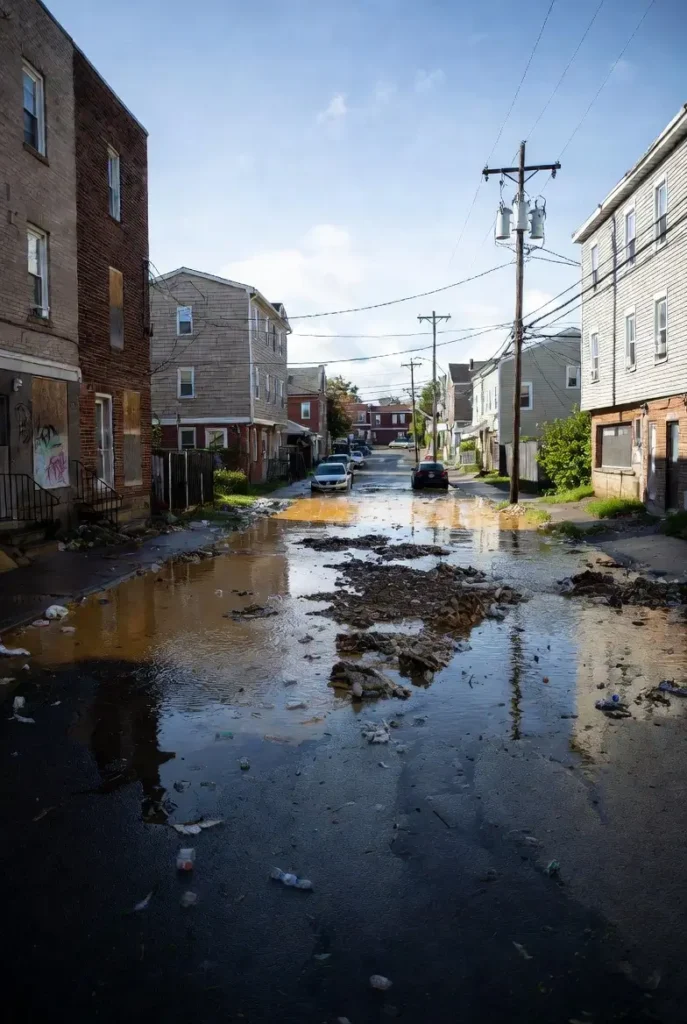
Common Causes of Sewer Backups in Coopersville
Sewer backups in Coopersville are not random. They usually come down to a few common causes.
Tree Roots in the Sewer Line
Older sewer lines are especially vulnerable to root intrusion. Roots are drawn to moisture. Even a small crack in a pipe is enough for roots to get in and grow. Over time, they trap debris and restrict flow until a full backup happens.
Grease and Debris Buildup
Grease, food waste, wipes, and paper towels all contribute to sewer blockages. Even if things seem to flush fine, they do not always make it all the way out. Over time, they collect in the main line and choke it down.
Heavy Rain and Saturated Ground
After heavy rain, sewer systems can struggle. If a sewer line already has buildup or damage, rainwater can push it past its limit. This is when backups often happen without much warning.
Aging or Damaged Sewer Pipes
Many homes in the area still rely on older sewer infrastructure. Pipes can sag, crack, or partially collapse. These issues restrict flow and make backups more likely.
Septic System Confusion
Some homes are not connected to city sewer at all. Septic tank problems often show the same symptoms as sewer backups. Slow drains, bubbling toilets, and sewage smells are common when a septic tank is full or failing.
Why Sewer Backups Are a Big Deal
A sewer backup is not just unpleasant. It is damaging.
Sewage can soak into flooring, drywall, and insulation. It can contaminate personal belongings and furniture. It can also create health risks and long-term odor problems if not handled quickly.
The longer sewage sits, the worse the cleanup becomes. What could have been a plumbing repair turns into a restoration project.
This is why sewer backups should never be ignored or “waited out.”
What NOT to Do When a Sewer Backup Starts
This is where a lot of homeowners accidentally make things worse.
Do not keep running water. Every flush, shower, or sink use adds more pressure to a system that is already blocked.
Do not pour chemical drain cleaners into the system. These products do not fix sewer backups and can damage pipes, especially older ones.
Do not assume it is just a simple clog. When multiple drains are involved, the problem is almost always in the main sewer line.
Do not try to force the issue with plungers or guessing. Blind attempts can lead to broken pipes or bigger messes.
If sewage is involved, the goal is to stop the damage, not experiment.
How Sewer Backup Problems Are Properly Identified
A real fix starts with understanding where the problem is.
A professional will determine whether the issue is inside the house or in the main sewer line. They will identify the cause, whether it is roots, buildup, pipe damage, or system overload. Then they address the blockage completely, not just temporarily.
This matters because sewer backup problems that are not fully resolved almost always come back.
When to Call a Pro for Sewer Backups in Coopersville
Some plumbing issues can wait. Sewer backups in Coopersville MI should not.
Call a professional plumber if you notice any of the following:
- Sewage backing up into a drain, tub, or toilet
- Multiple drains slow or backing up at the same time
- Gurgling toilets or floor drains
- Strong sewer odors inside the home
- Backups after heavy rain or water use
- Repeated clogs that keep returning
If you are unsure whether the home is on sewer or septic, that alone is a reason to call. Guessing leads to mistakes.
Why Acting Early Saves Money
Many people hesitate because they are worried about cost. The reality is that waiting almost always makes sewer backup problems more expensive.
Early action can prevent water damage, mold issues, and major cleanup costs. Once sewage spreads through a home, the repair bill grows fast.
Calling early is usually the cheaper option.
Plumber Talk about Sewer Backups
Sewer backups do not fix themselves. They do not get better with time. They only get worse.
If you are seeing warning signs in your Coopersville home, those signs matter. Slow drains, bubbling toilets, and sewer smells are your chance to stop the problem before it turns into a disaster.
Dealing With a Sewer Backup in Coopersville, MI?
Fast response for sewer backups, main line issues, and drainage problems.
Call Now: 844-423-0056