
There’s nothing quite like standing at your kitchen sink, watching the water rise instead of drain, wondering what you did to deserve this. A backed-up kitchen sink is one of the most common plumbing complaints in any household, and it’s also one of the most misunderstood. Most people assume it’s “just grease” or “just food,” grab a bottle of drain cleaner, and hope for the best. Sometimes that works. Often it doesn’t, and the problem creeps back a few weeks later, usually worse.
Understanding what’s actually happening underneath your sink can save you money, protect your pipes, and help you know when it’s time to stop fighting the clog yourself and call in a professional. Here’s a breakdown of the most common causes, why they happen, and how to tell when a DIY fix just won’t cut it.

1. Grease and Fat Buildup
This is the number one culprit in kitchen drains, and it’s sneakier than most people realize. Bacon grease, cooking oil, butter, and fat from meat all go down the drain as a liquid, especially when they’re still warm. But as that grease travels through your pipes, it cools and solidifies, clinging to the interior walls like plaque in an artery. Over time, layer after layer builds up, narrowing the pipe until water can barely squeeze through.
The tricky part is that grease buildup doesn’t happen all at once. It’s cumulative. You might pour bacon fat down the drain for months without an issue, and then one day the sink simply won’t drain at all. By the time you notice a problem, there’s often a significant amount of buildup already lining your pipes.
Prevention tip: Pour grease into a jar or can instead of down the drain, and wipe greasy pans with a paper towel before washing them.
2. Food Debris and Improper Garbage Disposal Use
Garbage disposals are convenient, but they’re not invincible. Certain foods are notorious for causing clogs, even when run through a disposal:
- Coffee grounds – they look fine going down but clump together into a dense, sludgy mass.
- Eggshells – the membrane can wrap around disposal blades and create gritty buildup in pipes.
- Rice and pasta – these expand when they absorb water, even after cooking, which means they can swell inside your pipes.
- Fibrous vegetables – celery, corn husks, and onion skins can tangle around disposal blades and slip past into the drain line, where they catch other debris.
- Potato peels – starchy and pasty, they tend to combine with other debris to form a paste-like clog.
Even with a disposal running properly, these items can accumulate in the drain line just past the trap, forming a partial blockage that worsens every time you run the sink.
3. A Clogged or Misaligned P-Trap
The P-trap is that curved section of pipe beneath your sink, and it exists for a good reason: it holds a small amount of water to block sewer gases from entering your home. Unfortunately, it’s also a prime spot for debris to collect, since it forces water to change direction sharply.
Food particles, soap residue, and small objects can settle in the low point of the trap and gradually build up until water can’t pass. The good news is that P-trap clogs are often the easiest to address, since the trap can usually be removed and cleaned out without much fuse. The bad news is that if the clog has moved beyond the trap into the horizontal drain line, cleaning the trap alone won’t solve the problem.
4. Soap Scum and Mineral Buildup
Bar soap and some dish soaps contain fats and oils that react with minerals in your water to form a waxy residue called soap scum. In areas with hard water, mineral deposits from calcium and magnesium can combine with this residue, gradually coating the inside of your pipes and narrowing the passage. This kind of buildup tends to happen slowly, over months or years, and is often mistaken for “just old pipes” when in fact it’s a treatable buildup issue.
5. A Blocked Vent Stack
Not every kitchen sink problem originates in the drain itself. Every plumbing system includes vent pipes that run up through your roof, allowing air to enter the system so that water can flow smoothly. When a vent stack becomes blocked, by leaves, a bird’s nest, or debris, your drains can start behaving strangely: gurgling sounds, slow draining, or bubbling water even when nothing seems physically clogged.
This is a less common cause, but it’s one that DIY drain cleaning tools and chemical cleaners won’t fix, because the blockage isn’t in the drain line at all.
6. Tree Roots or Damage in the Main Sewer Line
If multiple drains in your home are backing up at once, not just the kitchen sink, the issue may not be isolated to that one fixture. Tree roots can infiltrate underground sewer lines through tiny cracks or joints, growing into thick, drain-blocking masses over time. Aging pipes can also shift, crack, or collapse, restricting flow throughout the entire system.
This is one of the clearest signs that a problem has moved beyond a simple kitchen clog and into a whole-home plumbing issue.
DIY Fixes That Sometimes Work
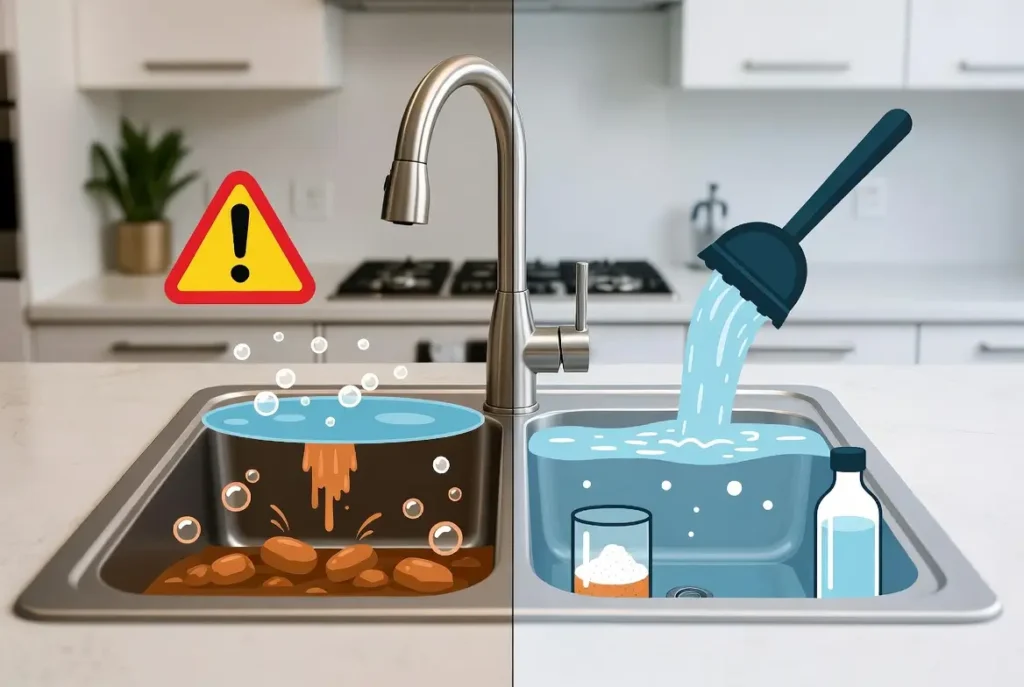
Before assuming the worst, there are a few safe steps worth trying:
- Hot water flush: Boiling water can help soften light grease buildup, though it won’t clear significant blockages.
- Baking soda and vinegar: This natural combination can loosen minor debris and freshen the drain, though its cleaning power is limited compared to mechanical methods.
- Plunging: A sink plunger (different from a toilet plunger) can dislodge simple clogs near the drain opening.
- Manual trap cleaning: Removing and cleaning the P-trap can resolve blockages that are contained to that section.
What you should avoid is repeated use of chemical drain cleaners. These products can generate heat that damages older pipes, and they often just push the clog further down the line rather than eliminating it, sometimes creating a bigger, harder-to-reach problem.
When It’s Time to Call a Professional
Some signs point clearly to a job that’s beyond home remedies:
- The clog keeps returning within days or weeks of clearing it
- Multiple drains are backing up at the same time
- You hear gurgling sounds from other fixtures when you run the kitchen sink
- Water backs up into the sink from the dishwasher
- There’s a persistent foul odor even after cleaning
- Plunging and basic cleaning haven’t made a difference
Professional drain cleaning typically uses tools like motorized augers or hydro-jetting, which can clear buildup and blockages far more thoroughly than any store-bought product. A professional can also use a camera inspection to identify exactly where the problem is, whether it’s a simple trap clog or something deeper in your sewer line, so you’re not guessing or paying for repeated fixes to the wrong section of pipe.
Slow Drains Are More Than Bad Luck
A slow or backed-up kitchen sink is rarely just bad luck. It’s almost always the result of buildup, blockage, or a structural issue somewhere in your plumbing system. Understanding the difference between a simple fix and a sign of something bigger can save you time, frustration, and unnecessary repair costs down the road. If your sink keeps backing up despite your best efforts, it’s worth having a professional take a closer look before the problem grows into something far more disruptive.