
A basement drain that backs up after rain is not a “random plumbing glitch.” It’s a symptom. And if you treat the symptom instead of the cause, it will keep happening every time the weather turns.
Most homeowners assume the drain itself is the problem. In reality, rain-triggered backups usually come from one of a few system failures in your home’s drainage or municipal sewer connection. The trick is figuring out which one you’re dealing with—fast—before you get repeated flooding, sewer gas smells, or expensive structural damage.

This is a breakdown of how to diagnose it like a technician, not a guess-and-hope homeowner.
Step 1: Understand What the Basement Drain Is Actually Doing
Your basement floor drain is usually tied into one of two systems:
- Sanitary sewer line (toilet, sink, shower waste)
- Stormwater system or combined sewer line (rain + sewage in older areas)
When it rains heavily, water enters the system in large volume. If something is wrong downstream, pressure builds up—and the lowest open point in your home becomes the release valve. That’s your basement drain.
So the real question isn’t “why is the drain backing up?”
It’s: where is the system failing under pressure?
Step 2: Identify the Type of Backup (This Changes Everything)
Not all backups are the same. The type of water coming up tells you what’s going wrong.
Clear Water Backup
If the water is mostly clear or slightly dirty:
- Likely a stormwater overload
- Possible foundation drainage issue
- Sump pump failure or overwhelmed weeping tile system
Dirty Water Backup
If the water is gray, brown, or smells:
- Sewer line is backing up
- Main line blockage or partial collapse
- City sewer surcharge entering your system
Smelly Gas Without Much Water
- Venting issue
- Trap seal dried out or siphoned
- Partial blockage preventing airflow
Each version points to a different failure point. Guess wrong, and you’ll waste money fixing the wrong thing.
Step 3: Check If This Only Happens During Heavy Rain
This is the most important diagnostic filter.
If it ONLY happens during heavy rain:
You are likely dealing with one of these:
- City sewer overload (combined system backup)
- Broken or overwhelmed backwater valve
- Cracked foundation drain tile letting water in
- Improper sump pump discharge (or pump failure)
If it happens randomly (rain or not):
You’re likely dealing with:
- Partial sewer line blockage
- Root intrusion in main line
- Pipe sag (“bellies” holding waste)
- Grease or debris buildup
If rain is the trigger, you are dealing with pressure, not just blockage.
Step 4: Rule Out the Sump Pump First (Fast Win or Immediate Failure Point)
If your home has a sump pump, this is step one.
Check:
- Is it running during rain?
- Is it discharging water far enough away from the foundation?
- Is the pit filling faster than it empties?
- Is the check valve working?
A weak or failing sump pump can overload the soil around your foundation. That water then finds its way into drainage systems and basement entry points.
If your sump pump is struggling, you don’t have a plumbing problem—you have a water management failure.
Step 5: Inspect for a Main Sewer Line Backup (Most Common Serious Cause)
If your basement drain is gurgling or pushing dirty water during rain, the main sewer line is the prime suspect.
Here’s how it happens:
- Rain enters municipal sewer system
- System becomes partially overloaded
- Pressure increases in shared sewer lines
- Your home becomes a low-pressure escape point
Now here’s the key issue:
If you don’t have a functioning backwater valve, your house is open to reverse flow.
Warning signs:
- Toilet bubbling during storms
- Basement drain gurgling
- Sewer smell during rain
- Water appearing in multiple basement fixtures
If you see more than one of these, it’s not a clog in a sink line. It’s system-level pressure. In cases like this, a professional sewer inspection and cleaning may be required, especially if the main line is restricted or partially blocked. You can learn more about local service options here:
Step 6: Look for Partial Blockages That Only Fail Under Pressure
A fully blocked pipe backs up all the time. A partially blocked pipe only fails when conditions get worse—like during heavy rain.
Common causes:
- Tree root intrusion in clay or older PVC lines
- Grease buildup narrowing pipe diameter
- Collapsed or offset pipe joints
- Debris buildup at low points
Think of it like a clogged artery. At rest, it works. Under pressure, it fails.
Step 7: Check the Backwater Valve (If You Have One)
If your home has a backwater valve, it is designed to stop sewer water from reversing into your home.
But here’s the problem: they fail often.
Failure modes:
- Stuck flap from debris
- Rusted hinge mechanism
- Improper installation slope
- Blocked access preventing maintenance
If the valve is stuck open, it does nothing. If it’s stuck closed, you’ll get internal backups instead.
Either way, if it hasn’t been serviced in years, assume it’s unreliable.
Step 8: Foundation Drain Tile Failure (Hidden Cause Most People Miss)
If your basement drain backup is mostly clean water during rain, the problem may not be sewer-related at all.
It could be your foundation drainage system.
Homes are surrounded by perforated drain tile that redirects groundwater away from the foundation. When that system fails:
- Water pressure builds around foundation walls
- Water enters through cracks or joints
- It finds the easiest escape route: basement floor drains
Signs include:
- Wet basement walls during rain
- Damp floors near foundation edges
- Musty smell after storms
Step 9: External Drainage Problems That Feed the System
Sometimes the problem isn’t underground—it’s around your house.
Check for:
- Downspouts dumping too close to foundation
- Clogged gutters overflowing near the house
- Improper grading sloping toward the home
- Driveway runoff pooling near foundation
If water is being dumped near your foundation during rain, your drainage system is getting overwhelmed before it even reaches underground pipes.
Step 10: When It’s Not a DIY Fix Anymore
If you’ve checked the basics and still see basement drain backup during rain, you’re likely dealing with one of these:
- Main sewer line restriction or collapse
- Municipal sewer surcharge issue
- Failed or missing backwater valve
- Foundation drain tile failure
- Combined multiple-system overload
At this point, guessing becomes expensive.
A proper diagnosis usually requires:
- Sewer camera inspection
- Flow test during rainfall conditions
- Pressure testing or smoke testing
- Full system evaluation
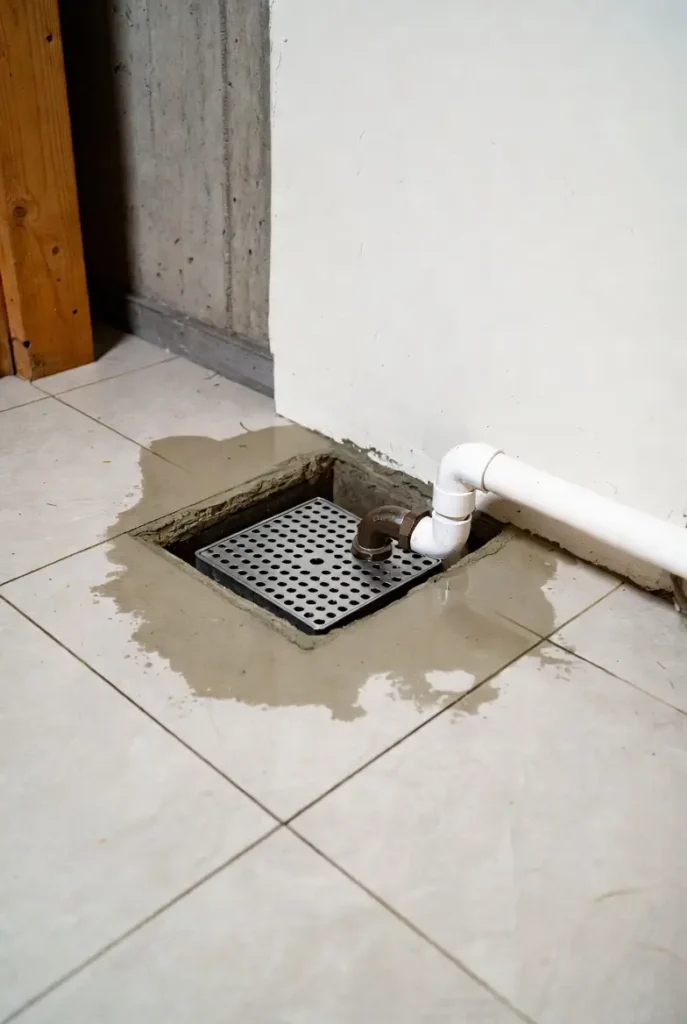
A basement drain backing up after rain is never just “bad luck.” It’s a predictable failure in one of four systems:
- Sewer line blockage or pressure reversal
- Sump pump or stormwater overload
- Foundation drainage failure
- External water management problems
The key is identifying whether you’re dealing with blockage, pressure, or groundwater intrusion. Each one looks similar at the drain—but requires a completely different fix.
Ignore it, and it gets worse every storm. Diagnose it correctly, and it becomes a one-time repair instead of a recurring disaster.
Toilet Bubbling or Making Gurgling Sounds?
If your toilet bubbles, gurgles, or drains slowly, it could be a sign of a clog in your drain line or sewer pipe. Our experienced technicians can quickly diagnose the problem and clear the blockage.
Call Now: 844-423-0056