When a drain starts slowing down, most people do the same thing. They head to the store, grab a bottle of drain cleaner or a cheap snake, and hope for the best.
Sometimes that works. A lot of times, it doesn’t. And sometimes, it actually makes the problem worse.

I see this all the time. Homeowners try to fix a drain themselves, spend money on chemicals and tools, and still end up calling a pro — except now the pipe is damaged, the clog is worse, or the backup turns into an emergency.
So let’s break this down the right way. When DIY drain cleaning makes sense, when it doesn’t, and why professional drain clearing is often the smarter move.
Why DIY Drain Cleaning Is So Popular
DIY drain cleaning is tempting for a few reasons:
- It’s cheap upfront
- It’s fast
- It feels like an easy fix
And to be fair, some minor clogs really are simple. You could have both hair and soap build up in your sink and bathtub. Small food debris near the kitchen drain opening.
In those cases, basic DIY methods can work — if you know what you’re dealing with.
Common DIY Drain Cleaning Methods (And Their Limits)
1. Plungers
Plungers are one of the safest DIY tools you can use.
They work best when:
- The clog is close to the drain opening
- The blockage is soft (hair, soap, light debris)
- The drain still moves a little water
They don’t work well for:
- Grease buildup
- Long pipe blockages
- Main sewer line issues
A plunger won’t hurt your pipes, but it also won’t magically fix deeper problems.
2. Handheld Drain Snakes or Zip Tools
These are great for hair clogs in bathroom sinks and showers.
They work when:
- Hair is the main issue
- The clog is within a few feet of the drain
- The pipe is still in decent shape
Where people mess up is forcing these tools too far or twisting aggressively. That can:
- Scratch older pipes
- Push the clog deeper
- Break brittle piping
Used gently, they’re fine. Used wrong, they cause problems.
3. Boiling Water, Baking Soda, and Vinegar
Let’s be honest — this is more maintenance than a real fix.
These methods might help with:
- Light grease residue
- Soap film near the drain opening
They will not fix:
- Thick grease buildup
- Hair tangles
- Solid obstructions
- Sewer line issues
And no, dumping boiling water repeatedly is not great for older pipes.
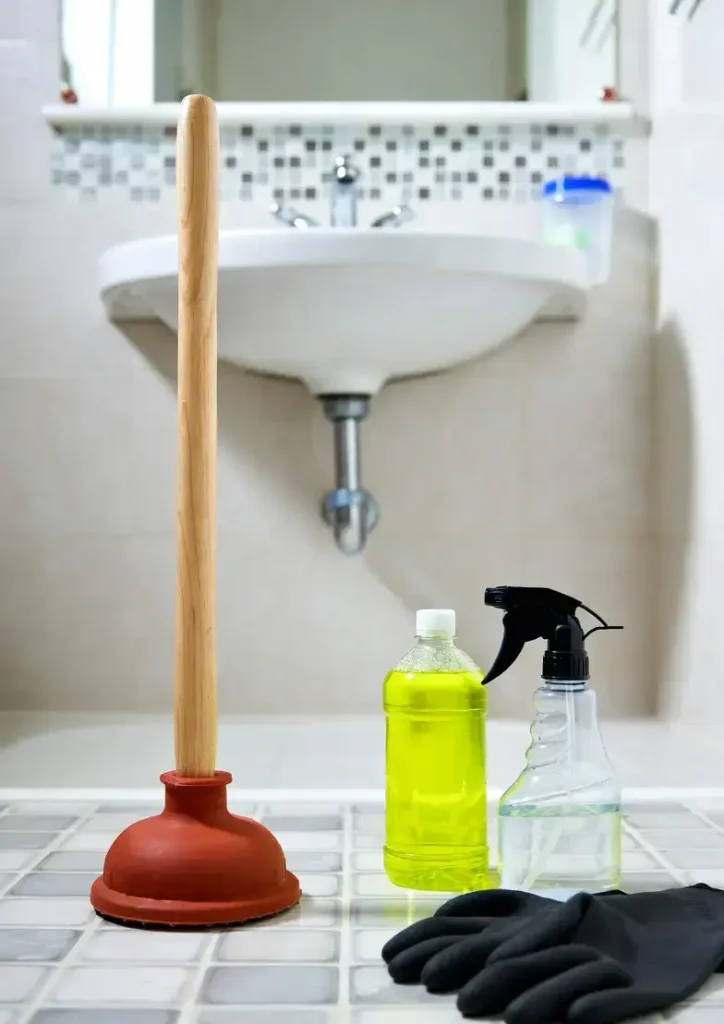
The Real Problem with Chemical Drain Cleaners
This is where things go sideways.
Store-bought chemical drain cleaners are one of the worst things you can put in your plumbing, especially in older homes.
Here’s why.
1. They Don’t Remove the Clog — They Burn a Hole through It
Most chemical cleaners work by creating heat. That heat may burn through part of a clog, but it rarely clears it completely. The result could be?
- The drain seems better for a short time
- The remaining buildup hardens
- The clog comes back worse
2. They Damage Pipes (Especially Older Ones)
Metro Detroit has a lot of homes with:
- Cast iron pipes
- Galvanized steel
- Older PVC
Chemical cleaners can:
- Corrode metal pipes
- Weaken joints
- Cause cracks over time
I’ve seen pipes fail months later because of repeated chemical use.
3. They’re Dangerous to You
Chemical drain cleaners are:
- Toxic
- Caustic
- Dangerous if splashed or inhaled
If you ever need professional service after using chemicals, it also puts the technician at risk. That’s a big deal.
When DIY Drain Cleaning Is NOT Enough
DIY stops making sense when you notice any of these signs:
- The drain keeps clogging
- More than one drain is slow
- Water backs up instead of draining
- Gurgling noises
- Bad smells that won’t go away
- You’ve already tried DIY and it failed
At that point, you’re not dealing with a surface clog anymore. You’re dealing with buildup deep in the pipe or a bigger system issue.
What Professional Drain Clearing Does Differently
Professional drain clearing isn’t just “a bigger snake.” It’s a completely different approach.
Here’s what actually happens.
1. Full Pipe Cleaning, Not Spot Fixes
Professionals use equipment designed to:
- Scrape the inside walls of the pipe
- Remove grease, hair, and sludge
- Restore proper pipe diameter
That means the problem is removed — not just punched through.
2. The Right Tools for the Right Job
Depending on the issue, professionals may use:
- Power augers
- Drain machines
- High-pressure water systems
- Camera inspections
This allows them to:
- Find the real cause
- Avoid pipe damage
- Fix the issue the first time
3. Protection for Your Plumbing System
Professional drain clearing is designed to protect your pipes, not destroy them.
That’s especially important if:
- Your home is older
- You’ve had recurring clogs
- You suspect grease or root issues
The Cost Difference (Short-Term vs Long-Term)
DIY looks cheaper — until it isn’t.
DIY costs:
- Repeated chemical purchases
- Temporary fixes
- Potential pipe damage
Professional service costs:
- One-time cleaning
- Long-term results
- Fewer emergencies
Most people end up paying more after trying DIY multiple times than if they’d just called a pro early.
When Calling a Pro Immediately Makes Sense
Don’t mess around if you have:
- Multiple slow drains
- Water backing up into tubs or sinks
- Sewage smells
- Flooding or standing water
- A history of recurring clogs
That’s not a DIY situation. That’s a call-now situation.
Skip the Chemicals. Fix the Drain the Right Way.
Professional drain clearing with same-day service available. Stop clogs before they turn into backups.
Call Now: 844-423-0056Watch How You Treat Drain Clogs
DIY drain cleaning has its place — but it’s limited. Once a clog moves past the drain opening, chemicals and store-bought tools usually do more harm than good.
If you want the drain actually fixed — not temporarily masked — professional drain clearing is the smarter move.