
Need Help With Your Home’s Plumbing?
Get help with stubborn drain clogs and plumbing concerns before they become bigger headaches. Call to discuss the problem and ask about available service options.
Call 844-423-0056As the fall settles in into Toledo, Ohio, homeowners have more to think about than just raking leaves and cleaning daughters. Colder nights are approaching, outdoor faucets, need attention, and small plumbing problems can be much bigger than headaches when the temperatures drop.

Some plumbing problems are unavoidable. Others happen because homeowners developed habits that seem harmless, but can lead to leaks, clogs, water damage, expensive repairs.
Plumbers see the same mistakes over and over: using the wrong glue on a leaky pipe, ignoring changes in water, pressure, pouring grease down a kitchen sink, this is most common. I am waiting until a pipe burst before preparing for winter.
But there is good news in many of these problems they’re preventable. You do not need a plumber to take better care of your Home’s plumbing in Toledo. You just need to know which jobs are safe to handle yourself and when it’s time for a professional to step in.
Here are seven cabin, plumbing habits to avoid, along with the practical fixes Toledo homeowners can do this fall.
Using the wrong glue to repair a leaking pipe
A small leak under the sink can look like an easy fix. It might be attempted to just grab the household adhesive waterproofing glue or tape or whatever glue yeah actually have in your garage.
But stop that’s a mistake
Plumbing pipes are made from different materials, including PVC, CPVC, copper, and other plastics or metals. Each material requires the correct fitting and repair method. Regular household glue is not going to be reliable for any plumbing repair, using the wrong product can leave you with a leak that returns when your system is under pressure.
What you should do instead
If you discover a leak under the sink or around the accessible pipe, here’s some steps that you should follow:
- Turn off the water supply if the leak involves a pressurized waterline
- Place a bucket or towel beneath the leak to protect your floor and cabinets
- Dry the area and look for the source of water without disassembling, unfamiliar plumbing
- Check whether the leak is coming from a loose connection, a drain fitting, or a damaged pipe
- If the source is unclear or the pipe is cracked, arrange a proper repair rather than covering it up with glue
A loose slip joint connection beneath the sink can sometimes be what the homeowner has to carefully tighten. A cracked pipe, damaged fitting or a leak inside the wall is a different matter.
Fall tip: check beneath the kitchen and bathroom sinks before winter. A slowly can be calm unnoticed for months, the cold weather can make an existing plumbing problem more difficult to deal with.
Ignore changes in water pressure most homeowners do not think that water pressure is a problem until something changes. Maybe the shower suddenly feels weak, the kitchen faucet barely runs, or the pressure seems is unusually strong throughout the house.
Ignoring these changes can mean overlooked plumbing issues.
Low water, pressure from a clogged faucet, aerator, a partially closed valve, a leak, or a problem with the water supply. High-pressure can unnecessarily put stress on your pipes, fittings, appliances, and water heaters.
Do not assume that every pressure change requires a major repair, but do not ignore it either.
How to check for a water pressure problem:
- Turn on a few faucets and see whether the change affects one fixture or the entire home
- If only one faucet has low flow, inspect the aerator for visible mineral buildup
- Check access accessible shut off valves. Just make sure that they have not been accidentally closed.
- Look for unexplained, damp spots, dripping pipes, oil changes in the water bill
- If the pressure is consistently abnormal, habit checked by a qualified Toledo plumber
A simple pressure gauge that connects to the appropriate hose bib can help you measure the pressure, provided the connection is suitable and safe to use. Many residential plumbing systems are designed for around pressure in the range of 40 to 80 psi, but the appropriate reading depends on the system and the local requirements.
If the pressure is above, the recommended range, a pressure reducing valve may need attention. If the drops circling throughout the house, they’ll cause may be outside the fixture itself.
Do not attempt to change unfamiliar pressure controls or any changes to the equipment just to see what happens.
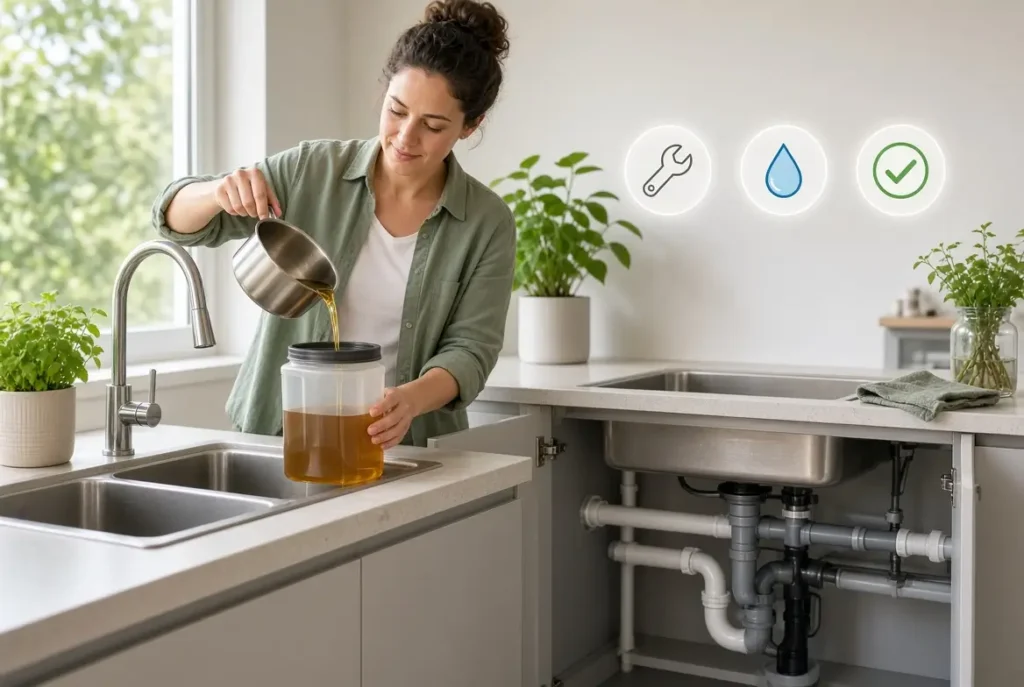
Poor Grease or food scraps down the kitchen sink
This is always a fun one, but this is also one of the easiest plumbing mistakes to avoid.
Cooking oil and grease may be liquid while hot, but once it cools as it travels through your pipes and plumbing. Overtime, the Grease can stick to the inside of the pipe and collect on the pipe itself. This result as a slow kitchen drain or a stubborn clogged.
A garbage disposal does that make Grease safe to pour down the sink. It also doesn’t guarantee that every food scrap will move through the drain without causing problems.
The better way to handle kitchen waste:
- Let Grease cool before placing it into a suitable container for disposal
- Scrap foods should go into the trash or compost before washing dishes
- Use a sink strainer to catch the overflow of leftover food
- Clean the strainer regularly so the water can flow through it
- Follow the garbage disposal, manufacturers instructions about which food should not be processed. Also one other thing we would like to mention do not run the garbage disposal if you suspect that lemon seeds, forks, any kind of plastic material went into the garbage disposal
If the Sink start draining slowly , stop, putting additional food waste down it. A suitable plunger may help with minor clogs, but repeated blockages may require mechanical drain cleaning.
Avoid mixing chemical drain cleaners with vinegar, bleach, or other products you could have a dangerous reaction with the combination.
For reoccurring problems, find out how to clear a clog kitchen drain.
Waiting until the freeze to protect your outdoor faucets
Toledo Winters do bring freezing temperatures, the outdoor faucets connected to an unprotected waterline can become a serious problem.
When water freezes it inside a pipe it expands. What can damage the pipe or faucet? Sometimes the damage is not obvious until the ice melt, and the water brings a leak upon, and this can sometimes show within a wall, a basement, or a crawlspace.
Waiting until the first hard, freeze leaves less time to identify vulnerable plumbing.
How to prepare your outdoor plumbing for the fall
- Disconnect the garden hose from the outdoor faucets
- Drain water from the hose before storing
- Shut off and drain the outdoor faucet supply line if your plumbing system has a dedicated interior shut off valve and the manual Falcon tell you to do so
- Install a faucet cover where useful
- Check access accessible pipes in unheated, garages, crawlspace, and the basement
- Make sure vulnerable areas have adequate insulation
Do not assume that the faucet cover alone will protect a poorly insulated or exposed waterline. The correct preparation depends on the type of faucet and how the pipe is installed.
If you have a frost, free faucet, disconnecting The hose is still important because a connected hose can prevent proper drainage and increase the risk of freezing damage.
If a pipe freezes, do not open a flame to thaw. If you suspect a busted or burst pipe, shut off the main water supply if it is safe to do so, and contact a professional plumber in your area of Toledo.
Treating every clog with a chemical drain cleaner
A bottle of drain cleaner may seem like the cheaper and easier option than calling a plumber. Sometimes people use it repeatedly because the water drains batter for a short time.
Or they may just get a drain snake and just get some of the clog out from the top part of the drain but not know what down below further down the pipe.
The problem is the chemical drain cleaner does not solve every type of clock. They may be ineffective against certain obstructions, and some products can damage particular plumbing materials or create hazards for any working drain afterwards.
Repeated you can distract you from the real problem. A drain that keeps clogging may have buildup further down the pipe or an underlying issue.
What to try before reaching for chemical
If you have a minor clog:
- Remove visible hair or debris from the opening at the top
- Use a suitable plunger, according to the fixtures instructions. You can can sometimes get a plunger for a dollar or two dollars at the hardware store.
- If the clog is in the sink, check the accessible stopper for trapped debris
- If the water remains blocked or the problem returns
Do not boil water in discriminately. Extreme heat may cause damage to your plumbing material, seals or fixtures warm tap water is a safe option for many routine cleaning tasks, provided there are no other hazards
Never makes drain cleaning chemicals. If you have already used a chemical product and the drain remains blocked, tell the plumber what you exactly used before they begin work.
If you’re dealing with repeated clogs, professional drain cleaning in Toledo Ohio may be more effective than continuing to byproducts that do not address the main cause of the clog.
Ignore small leaks and damp spot
A drip beneath a sink or a damp spot near a water heater may not seem like an urgent matter. But a small leak can damage cabinets, flooring, drywall, and stored belongings overtime.
In the fall homeowners need to spend more time indoors and they start noticing musty smells or moisture that was less obvious during the warmer months. These signs should not become dismissed as ordinary, seasonal changes.
What homeowners should check?
Walk-through your home and look at:
- The pipes and fittings beneath your bathroom and kitchen sinks
- Floors around the toilet base
- Visible connections to the washing machine
- Areas around the water heater
- Exposed pipes in your basement or crawlspace
- Ceilings or walls beneath the bathroom, bathrooms and other plumbing fixtures
Look for water stains, corrosion, dripping connections, swollen cabinet, materials, or unexplained moisture.
If you have a fixture that is dripping, first determine whether the leak is from the faucet, a visible supply connection, or a drain. Homeowners may not be able to replace a simple washer or a aerator, depending on the fixture. A leaking pipe, damage shut off valve, a hidden leak may require professional repair.
If the water is actively spreading, shut off the appropriate water supply if you can do so safe safely. Do not touch any electrical equipment or wet electrical areas.
Catching a small leak early can help prevent larger repairs later.
Skipping seasonal plumbing checks
Plumbing maintenance is a easy to forget type of task for the fall because most of the pipes are hidden. But a short seasonal inspection can help identify problems before the cold weather arrives.
For Toledo homeowners, late fall is a useful time to prepare outdoor faucets, Check exposed pipes, and look for leaks or slow drainage.
Here is a simple, fall, plumbing checklist
Before the weather temperatures drop:
- Disconnect the garden hose and prepare your outdoor faucet
- Check exposed pipes in unheated area areas
- Look beneath your bathroom sink and around your appliances even check your kitchen sinks
- Test your faucets and drains for changes in flow
- Check your water heaters for leaks or corrosion
- Locate your main water shut off valve
- Make a note of reoccurring drain or pressure problems
If you have a basement, pay attention to the floor drains and any histories of water backing up after a heavy rain. A floor drain that backs up with waste water cannot be treated as a routine cleaning task.
Seasonal checks, especially useful in older homes, properties with previous plumbing repairs, and houses that have exposed plumbing and cold areas.
A professional inspection may be worthwhile if you have reoccurring problems, visible corrosion, or an unexpected or unexplained, high water bill, or the pipes are difficult to get to safely.
When should you call a plumber instead of fixing it yourself?
DIY plumbing maintenance is reasonable when the task is simple, accessible, and with in your experience wheelhouse. Cleaning a sink aerator, removing visible hair, checking for leaks, and disconnecting and garden hose are just a few examples of routine jobs that any homeowner could handle.
Call a professional if you notice:
- A pipe that is cracked, leaking, heavily, or frozen
- Several drains are backing up at once
- A sudden loss of water pressure throughout the house
- Sewage coming up through the tub, sink or floor drain
- A leak inside the wall or ceiling
- If you have repeated clogs that return after cleaning
- A water heater leak or other problems involving unfamiliar equipment
If sewage is backing up, avoid contact with the water and stop using affected plumbing where possible. If a pipe burst, shut off the main water supply if it is safe and accessible.
The point of DIY maintenance is to prevent avoidable problems, do not take on any repairs that could cause further damage.
Build better plumbing habits before the winter
Many expensive plumbing calls start with a small issue that homeowners ignore or try to fix by themselves without the proper materials. Using household glue on a pipe, ignoring water, pressure issues, pouring, grease down the drain, and waiting for freezing weather to arrive will create unnecessary trouble.
The fix is straightforward: inspect your visible plumbing, keep all drains clear, pay attention to the water flows, and prepare your outdoor faucets for dropping temperatures.
You do not need to inspect every pipe every day. A few minutes each week and more throughout the season can go along way Check certain areas or pipes early. Keep you out of trouble in the long term.
When a problem goes beyond basic maintenance, get professional plumbing advice before experimenting with tools or chemicals. A proper repair is usually better than covering up the system or the symptoms and hoping that they disappear. Plumbing problems do not disappear. They can just get worse.
Frequently asked questions about your plumbing
What plumbing maintenance should I do before the winter in Toledo, Ohio?
Disconnect garden hoses, prepare outdoor faucets, according to their design, and inspect exposed pipes and unheated areas, check beneath your kitchen sink, bathroom sink, and even your laundry tub for leaks. As a homeowner, you should know where your water shut off valve for the whole house, which is considered your main shut off valve before the freezing weather arrives so you know where to shut the water off if a pipe burst.
Is it safe to use baking soda and vinegar to clean your drains?
They can videos as a mild household, cleaning method for light residue, but they are not a reliable fix for a stubborn clog. Never combine vinegar with a chemical drain cleaner or bleach. If a drain continues to be blocked after multiple attempts to clear it, stop experimenting, and just call a professional drain cleaner.
What does it mean when water pressure suddenly drops in the house ?
A sudden drop may cause a water supply problem, a potentially closed valve, a leak, or an issue with the plumbing system in general. Check whether the problem affects one fixture or the entire home. The pressure change is sudden, widespread or accompanied by signs of a leak, reach out to a qualified plumber in the local area of Toledo, Ohio.
Can a small plumbing leak wait until the spring?
It is better not to wait. Even I slowly can damage cupboards, floors, walls, and freezing temperatures can complicate existing plumbing problems. The ideal situation is to identify the source if it’s safely accessible, contains the water, and arrange the appropriate repair. If the leak is active or near an electric electrical equipment, prioritize safety, and get help promptly.
Need help with a plumbing problem
Do not let a small leak, reoccurring, clogs, or a fall plumbing issue turned into a big repair. If you need help with a stubborn drain or another plumbing concern, call to discuss the problem and find out what service may be appropriate.