
Still Dealing With a Clogged Drain?
If your drain won’t clear with basic DIY methods, keeps clogging, or is backing up, professional drain cleaning can help find and remove the blockage.
Call 844-423-0056A slow drain or a drain doesn’t mean that you need to call a plumber right away. A lot of common kitchen and bathroom clogs are caused by things such as hair, soap, scum, grease, food, particles, and other buildup that you may be able to deal with yourself.

Before you spend any money on a service call, there are several things you can do safely at home.
The important thing is to know which method to use, not to mix together, and when the clog is telling you that there is a bigger problem.
Here’s where I would start.
What usually causes a drain to clog
Most homeowners or household clogs aren’t mysterious.
Something has built up in the pipes until the water can no longer move through normally.
Common causes include:
- Hair in the shower bathtub drains
- Soap or shampoo that is built up
- Grease are cooking oil in the kitchen drains
- Coffee grounds
- Food particles
- Dirt and debris
- Mineral buildup
- Objects accidentally washed down the drain
A slow drain is often the first warning.
if you deal with this, why of the water is still draining, you may have a much easier job than if you wait until the pipe is completely blocked.
What should you try first on a slow drain?
Start with the simplest method first. Remove anything that you see near the drain opening. For a bathroom sink or a shower put gloves on and look for hair, soap, buildup, or other debris. For kitchen sinks, check whether the food degrees appears to contribute to the problem.
You don’t want to immediately dump a bunch of products down the drain when the clog may be sitting near the opening.
Sometimes removing visible material is enough to get the water moving again.
DIY drain cleaning hack one: the use of hot water
Hot water is the easiest thing to try, particularly in some kitchen drain buildup. Heat the water and slow slowly. Pour it down the drain. Don’t dump a huge amount of water, especially boiling water down the sink all at once.
If you have other plumbing, or you are unsure of the type of pipes, you have, use very hot water rather than aggressively boiling water.
Hot water can help loosen up soap, grease and residue.
It won’t magically dissolve every clog. If you have a large amount of hair blocking your shower, drain, for example, hot water isn’t going to remove the hair. That’s when you need a mechanical method.
DIY drain cleaning hack number two: use a plunger
A plunger is one of the best tools to have in the house. You don’t need anything fancy.
For your sink:
- put enough water in the basin to cover the bottom of the plunger
- Place the plunger directly over the drain
- Make sure you have a good seal
- Push down and pull up several times
- Keep the plunger, sealed against the drain while working it
- Remove the plunger and see whether the water starts draining
You may need to go several rounds.
For a bathroom sink, you may need to block the overflow opening with a wet cloth so you you can get better pressure.
Can a plunger clear a shower drain?
Yes, a plunger can sometimes clear a shower drain particularly when the blockage isn’t too far down the pipe.
remove standing water if there is too much then create a good seal over the drain.
If plunging doesn’t improve the drainage, don’t do it endlessly move onto another method.
DIY drain cleaning number three: use baking soda and vinegar
This is one of the most common household drain cleaning hacks.
It can be used for light buildup and odors, but don’t expect it to dissolve a serious hair or Grease clog.
Try this:
- remove standing water if possible
- Pour about a half a cup of baking soda down the drain
- Pour one cup of vinegar down the drain make sure it’s white vinegar
- Let that sit for about 10 to 15 minutes
- Then flush it with warm water
The fizzing reaction can loosen some residue. But there is an important part to remember:
Baking soda and vinegar is not a replacement for drain snakes when you have a solid physical blockage.
If the drain is backed up with hair, the mixture isn’t going to make the hair disappear.
DIY hack number four: try using a small hand auger
If you have a stubborn shower or bathroom sink or a tub clog, a small hand auger be much more useful than repeatedly pouring things down the drain.
A head auger is a flexible cable that goes into the drain and can grab a breakthrough the blockages.
The basic process is:
- remove the drain cover
- Feed the auger slowly through the drain
- Turn the handle as you push the cable forward
- Rotate the cable gently
- Pull it back out
- you want to feel a little resistance, but don’t force it
- Remove any hair or debris
- Repeat as necessary
- Run warm water after you’re done with this task
If the cable becomes stuck, don’t start forcing it. You can damage the drain or get the tool stuck inside the pipe.
The best thing to do is follow the manufacturers instructions for the auger when you’re using it.
drain cleaning hacks number five use a plastic drain tool
For shower and bathroom sink clogged a simple plastic drain cleaning tool can be surprisingly helpful. These are inexpensive tools that have small barbs designed to grab hair. I have one. It’s technically under my bathroom sink. It’s yellow. I get them at Ace Hardware. But you can remove the drain cover insert the tool and pull it back out.
You may be surprised by how much hair does come out of the drain that still appears to be working. This is one of the easiest things to try before reaching for chemicals. I do it every couple weeks for my shower and sink drains works like a charm.
DIY drain cleaning hack number six clean the sink trap
If you have a bathroom or kitchen sink clogged, the blockage could be sitting inside the P-trap underneath the sink. Put a bucket underneath the trap before removing anything.
Then:
- Place the bucket underneath the trap
- loosen the connection carefully
- Let the water drip into the bucket
- Remove the trap
- Clean out the debris
- Reassemble the trap
- Run water to check if it’s leaking
If the fittings are corroded, stuck or difficult to remove, don’t force them. A damage connection can turn a simple clog into a plumbing leak.
What about homemade enzyme drain cleaners
Enzyme base drain cleaning treatments are different from harsh chemical drain openers. They use biological enzymes or bacteria design to breakdown certain materials. They are generally used for a maintenance treatment rather than an emergency solution for a completely blocked drain.
These drain cleaners can help with organic buildup such as:
- Grease
- Food residue
- Soap organic material
- Other biodegradable material
Follow the instructions and give the right amount of time recommended.
Don’t expect the enzyme cleaner to instantly clear a completely blocked drain. You should think of it as more of a maintenance tool than a magic clog remover.
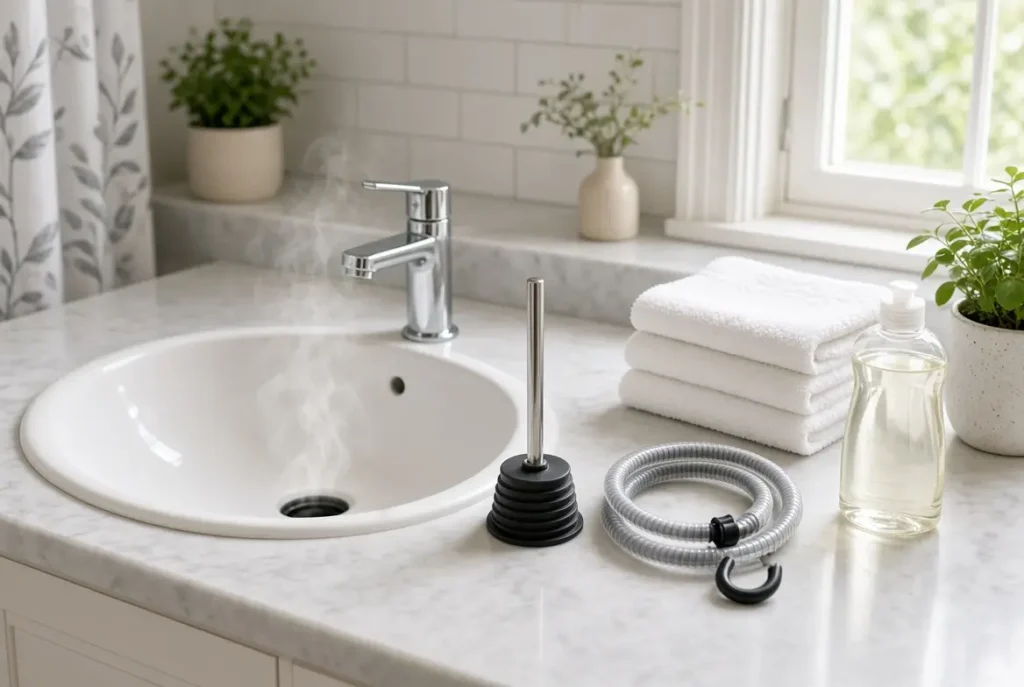
Use a chemical drain cleaner
I’d be careful with chemical drain cleaners. They can sometimes clear certain clogs, but they are always the best first option. If the clog or the chemical does not clear, you can still have a pipe full of caustic liquid. That creates a safety problem if you later try to drain snake or take the plumbing apart.
Chemical drain cleaner can always also be hard, uncertain, plumbing material materials, if used improperly or repeatedly.
If you already reported drain cleaner, chemical down the drain, don’t start mixing it with vinegar and bleach, baking soda, or other chemicals.
You should follow the product safety instructions.
What you should never mix down a drain
This is important. Don’t start experimenting with different cleaning chemicals. Never makes products unless the product directions specifically say it is safe to combine with anything.
What I am talking about in particular is avoid mixing:
- Bleach and vinegar
- bleach with ammonia
- Chemical drain cleaner with other cleaners
- Drain cleaner with vinegar and other acids
Some combinations can create dangerous fumes, and chemical reactions. When you are trying to DIY drain fix, simple is usually better.
How do I know if your DIY drain fixed worked
Don’t assume the clog is gone because the water moves once. Test the drain. Run water for a few minutes and watch what happens.
What you will see or what you want to see:
- Water draining quickly
- no water pooling around the drain
- No gurgling sounds
- No smelling sewage
- No backups around the fixtures
- No immediate return of the slow drainage
If water starts to drains fully again after a few minutes, you probably have a bigger drain problem and haven’t completely solve the problem.
why does the drain keep clogging after I clean it?
If you clear a drain and it keeps clogging again, it’s time to pay attention to.
You may have:
- more buildup further down the pipe
- A reoccurring hair problem
- More Grease than you know is inside the drain that is coding the pipe
- Tree roots in a sewer line
- Damage to the pipe
- A problem with the main drain
- A clogged that wasn’t completely removed
A drain that repeatedly clogged isn’t something to keep treating with household mixtures. At this point, you need to figure out why it keeps happening.
When should you stop DIY drain cleaning?
Call a professional when the simple methods aren’t working or you see signs of a bigger problem. Some of the biggest warning signs are:
You have multiple drains that are backing up
If your kitchen sink, bath tub, toilet, and basement drains are all having problems, the blockage may be further down the system.
Sewage is coming back into the house
That’s not a normal little sink clog. Stop using water and get the problem addressed.
Drain keeps clogging
If you have cleared the same drain several times and the problem keeps coming back, there’s probably more going on and you need the help of a plumber.
You hear gurgling from several fixtures
Gurgling can indicate air or water movement problems further down the drain system.
Water backs up somewhere else
If you run a sink and the water comes up through another drain, that’s a reason to stop using the plumbing until you understand what is happening.
The DIY tools get stuck
Don’t force an auger or drain snake. You’ll damage the plumbing and make the problem worse.
How can you prevent future drain clogs?
The easiest way to fix a drain clog is the one you never create. For shower drains, use a catcher and clean up regularly.
When we’re talking about your kitchen sink:
- Dan, don’t pour Grease down the drain
- Scrape food into the trash
- Use a garbage disposal properly if you have one
- Don’t wash coffee grounds into the sink
- Run plenty of water when using the disposal
For your bathroom sinks:
- for your bathroom sinks, keep her out of the drains
- Keep a stopper in the drain opening and clean it regularly
- Don’t wash large amount of toothpaste or thick products into the drain
A few seconds of maintenance can save you from dealing with a completely blocked drain later.
Here is a DIY drain cleaning checklist
Before you call a plumber here is what you can check safely:
- remove visible hair or debris
- Try hot water, flush when it’s appropriate
- Try using a plunger
- Use baking soda and vinegar for light residue
- Use a plastic hair removal tool usually yellow again you can get them at Ace Hardware
- Use a small hand auger
- Check your P-trap if you’re comfortable with the maintenance
- Test the drain with running water
- Watch for reoccurring slow drains
- Make sure that you’re looking for multiple drains that are backing up
- If sewage is coming into the house
- Don’t mix drain cleaning chemicals
Homeowners questions about DIY drain cleaning
What is the easiest way to unclog a drain?
Start by removing visible debris, then try plunger. For shower drains, using a plastic hair removal tool or a small hand auger will most likely get the job done and clear the blockage.
Does boiling water really unclog a drain?
Hot water can loosen grease, soap and other residue, particularly in kitchen drains. It won’t remove every type of clog, especially for solid hair blockages. Use caution with very hot boiling water if you have older or unknown plumbing.
It’s baking soda and vinegar safe for your drains
For many homeowners or households, this is a common question and yes, a small baking soda and vinegar. Treatment can be used for white residue and orders. It shouldn’t be treated as a guaranteed way to dissolve a serious clog. Never makes vinegar and bleach or chemicals at a commercial level drain cleaner.
What can I use instead of a chemical drain cleaner?
Try mechanical methods first. A plunger, plastic drain, cleaning tool, or a hand auger can particularly remove or break up a clog without leaving harsh chemicals, sitting inside the pipe.
Why does my train keep clogging?
A reoccurring clog means the original blockage wasn’t completely cleared or removed or there’s a deeper buildup further down the pipe, you have a damaged pipe, tree, roots, or problems with the main drain. If you’re clearing the same drain consistently, it’s worth having it diagnosed by a local plumber.
When should I call a professional for a clogged drain?
Calling a professional the multiple drains are backing up, sewer, just coming into your house, the clock keeps reoccurring, DIY plumbing methods are not working, or you’re dealing with a blockage that is safely can’t be reached.
Do you need help with a stubborn drain?
If you’ve tried all the basic DIY methods and the drain is still slow, clogged or backing up it may be time to stop guessing and have the blockage properly cleared.
Do you need a plumber?
You don’t need to call a plumber every time you have a slow drain or if your drained slow down. Start with the simple stuff.
Remove any visible debris. Have a plunger if necessary. Use the hair with the barbs or you could use a small handheld auger. Hot water and baking soda and vinegar treatment might be able to lighten up the buildup or if you’re dealing with white buildup can take care of it in some cases.
But don’t keep throwing things down the drain when the problem isn’t going away. If you are dealing with the same drain clog, multiple drains are backing up, or have sewage coming into your house that’s a no-no, you’re dealing with something that many DIY methods can’t simply fix.
The goal isn’t to avoid calling a professional at all costs.
The goal is to know when it is reasonable to handle the problem yourself and when you’re better off, getting the drain properly cleared.