
Need Help With a Midnight Drain Clog?
If your Bay City-area drain won’t clear, keeps backing up, or multiple fixtures are affected, professional drain cleaning can help locate and remove the blockage.
Call 844-423-0056A clogged drain is annoying during the day. At midnight, when everyone is asleep and water is backing up onto the floor, it can feel like an emergency.

The good news is that you do not always need to fix the clog immediately. Your first priority is to stop additional water from entering the affected drain, prevent overflow, and determine whether the problem is something you can safely handle yourself.
For homeowners in Bay City, Michigan, this midnight drain-cleaning checklist walks through what to do step by step, what tools can help, and when a clogged drain has moved beyond a reasonable DIY repair.
What Should I Do First When a Drain Backs Up at Night?
Stop using the affected plumbing fixture immediately.
Do not keep running the sink, taking a shower, flushing the toilet, or running an appliance connected to the same drainage system.
Then:
- Stop the flow of water.
- Move items away from the affected area.
- Check whether other drains are backing up.
- Remove standing water if it is safe to do so.
- Gather basic drain-cleaning tools.
- Try a simple DIY method if the problem appears localized.
- Call a professional if wastewater continues backing up or multiple fixtures are affected.
The biggest mistake is continuing to use water because the clogged fixture appears to be draining slowly. A partial blockage can suddenly become a complete blockage.
Step 1: Do You Know What Drain Is Clogged?
Before reaching for a tool, determine whether you are dealing with one clogged fixture or a larger drainage problem.
Check nearby:
- Bathroom sinks
- Showers
- Bathtubs
- Toilets
- Kitchen sinks
- Basement floor drains
If only one sink or shower is affected, the blockage may be close to that fixture.
If several fixtures are backing up at the same time, the problem could be farther down a shared drain line.
Fixture Is Running Why Is My Shower Backing Up
If running a sink, washing machine, or other fixture causes water to rise in a shower or floor drain, the blockage may be located farther down the drainage system.
That is different from a simple hair clog directly underneath the shower.
In that situation, stop using the plumbing until the drainage problem can be properly evaluated.
Step 2: Protect the Area From Water Damage
If water is already standing around a sink, tub, shower, or floor drain, move anything that could be damaged by water.
This can include:
- Towels and rugs
- Toilet paper
- Cleaning supplies
- Storage boxes
- Bathroom furniture
- Items stored on basement floors
Use towels to contain small amounts of clean water.
If the water appears to contain sewage or contaminated wastewater, avoid unnecessary contact with it and do not treat it like ordinary spilled water.
Step 3: Gather Your Basic Drain-Cleaning Tools
You do not need a professional plumbing truck sitting in your garage to attempt a basic drain fix.
Useful household tools include:
- Plunger
- Flashlight
- Rubber gloves
- Bucket
- Towels
- Adjustable pliers
- Small hand-operated drain snake
- Drain strainer or removal tool
A flashlight is particularly useful during a midnight repair because it lets you inspect the drain without blindly reaching into standing water.
Step 4: Remove Visible Debris
If you are dealing with a bathroom sink, bathtub, or shower, inspect the drain opening.
Remove the stopper or drain cover if it can be safely removed.
Look for obvious material such as:
- Hair
- Soap buildup
- Dirt
- Small debris
Pull out what you can reach safely.
Do not shove debris farther into the pipe.
For a shower or bathtub, a surprising amount of slow drainage can be caused by hair accumulating near the drain opening.
Step 5: Try a Plunger
A plunger is one of the simplest tools for dealing with a minor drain blockage.
For a sink, make sure there is enough water to cover the plunger’s cup. Seal the overflow opening if necessary, then use several controlled plunges.
For a shower or tub, create a seal over the drain and plunge firmly without using excessive force.
After several attempts, check whether the water begins draining normally.
If it does, run a small amount of water and watch the drain.
If the water immediately begins backing up again, the blockage may not be fully cleared.
Step 6: Try a Small Drain Snake
If a plunger does not work and you have a small hand-operated drain snake, you can attempt to reach a shallow blockage.
Feed the snake into the drain gradually rather than forcing it.
When you encounter resistance, rotate the tool according to its instructions and work it carefully.
The objective is to grab or break through the obstruction—not to force a tool through the plumbing.
If the snake does not advance, gets stuck, or fails to improve drainage, stop.
A deeper obstruction may require professional equipment.
Step 7: Be Careful With Chemical Drain Cleaners
A midnight clog can make chemical drain cleaner seem like the fastest solution.
It is not always the best one.
Chemical cleaners may not remove every type of blockage, especially when the problem involves a deep obstruction, tree roots, damaged piping, or heavy buildup.
Avoid mixing different drain-cleaning chemicals.
If you have already used a chemical product and need to call a plumber, tell them exactly what was used before they work on the drain.
Step 8: Check for Warning Signs
After attempting a basic fix, pay attention to what the plumbing is doing.
Call a professional if:
- The drain remains completely blocked
- Water immediately backs up again
- Multiple drains are affected
- Wastewater appears in another fixture
- You hear repeated gurgling
- There is a strong sewage odor
- A toilet and another drain are backing up together
- A basement floor drain is overflowing
- You suspect a main drain blockage
These symptoms can point to a problem farther down the plumbing system.
Is a Clogged Drain an Emergency at Midnight?
Not every clogged drain requires emergency service.
A single bathroom sink that drains slowly may be something you can safely manage until morning.
A different situation is a toilet overflowing with wastewater, sewage entering the home, or multiple fixtures backing up.
The emergency is usually the active water or wastewater backup—not simply the fact that the drain is clogged.
If water is actively damaging the home or contaminated wastewater is spreading, prioritize stopping water use and getting professional assistance.
Why Do Multiple Drains Back Up at Once?
When several fixtures begin backing up together, the problem may involve a shared drainage line.
For example, you might notice that:
- The shower drains slowly
- The toilet bubbles when flushed
- The bathroom sink backs up
- The basement floor drain contains water
Those symptoms occurring together are more significant than one isolated slow drain.
Trying to clear each fixture individually may not solve the actual blockage.
What Should I Do If the Clog Comes Back in the Morning?
If your DIY attempt gets the drain moving but the problem returns, do not assume the issue is permanently fixed.
A recurring clog can be caused by material remaining farther down the pipe.
Other possibilities include:
- Grease accumulation
- Mineral deposits
- Tree roots
- Damaged piping
- A partially blocked shared drain
- An obstruction that was only temporarily moved
A recurring problem deserves attention because repeatedly clearing the same symptom does not necessarily eliminate its cause.
What Does a Professional Drain Cleaner Do?
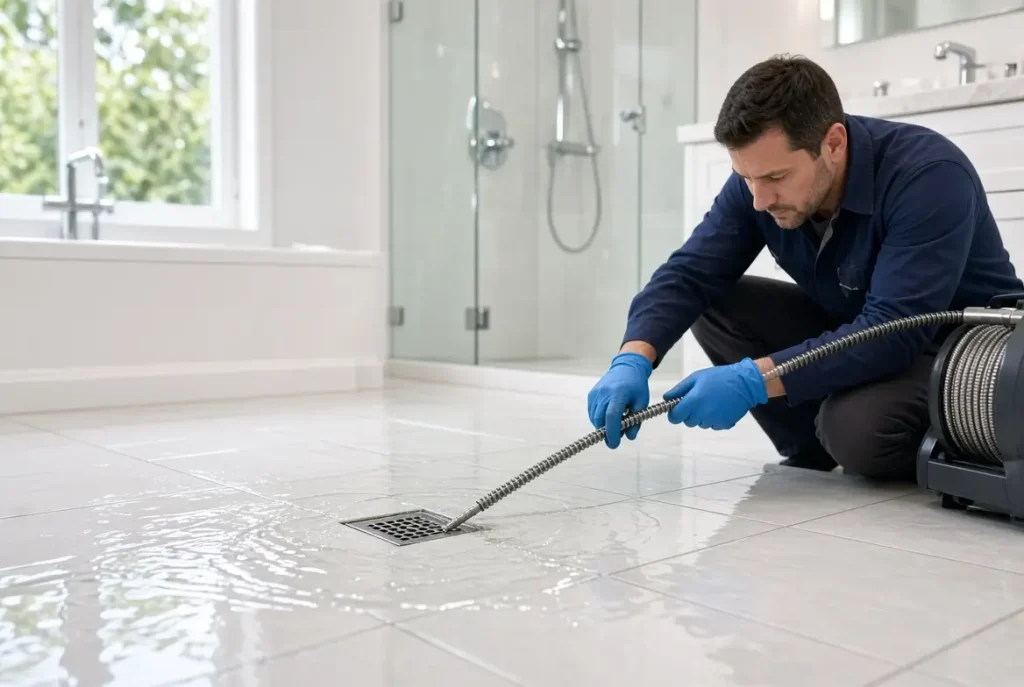
A professional drain cleaner can evaluate the symptoms and determine how best to access the blockage.
Depending on the situation, they may use specialized equipment such as:
- Drain augers
- Professional drain snakes
- Mechanical drain-cleaning equipment
- Inspection equipment when appropriate
The equipment used depends on the type and location of the blockage.
A professional can also determine whether the problem appears to be limited to one fixture or connected to a larger drainage line.
Can a Midnight Drain Clog Cause Water Damage?
Yes, particularly if water continues entering the plumbing after the drain stops flowing normally.
An overflowing bathroom or kitchen fixture can damage:
- Flooring
- Cabinets
- Baseboards
- Drywall
- Sub flooring
A backed-up basement drain can create additional problems because water may spread across stored belongings and finished areas.
Discontinuing water use at once after you detect the backup helps limit potential damage.
How Can Bay City Homeowners Prevent Midnight Drain Clogs?
A few basic habits can reduce the chance of dealing with a surprise blockage.
Keep Hair Out of Shower Drains
Use a drain catcher and clean it regularly.
Do Not Pour Grease Down the Sink
Grease can accumulate inside plumbing and contribute to restrictions.
Keep Food Debris Out of Drains
Use the appropriate disposal method for food scraps rather than relying on the kitchen drain to carry everything away.
Address Slow Drains Early
If a drain has been getting progressively slower for several days or weeks, don’t wait for it to become completely blocked.
Taking care of a developing drainage problem during normal business hours is considerably less stressful than discovering a full backup at midnight.
A Quick Midnight Drain-Cleaning Checklist
If you wake up to a clogged drain, remember:
STOP: Stop using the affected fixture.
CHECK: See whether other drains are affected.
PROTECT: Move belongings away from standing water.
INSPECT: Remove visible debris around the drain.
PLUNGE: Try a properly sealed plunger.
SNAKE: Use a small hand-operated drain snake if appropriate.
WATCH: See whether the drain stays clear.
CALL: Get professional help if the blockage persists, returns quickly, or affects multiple fixtures.
When Should You Call a Professional Drain Cleaner?
Call a professional when the clog cannot be cleared with basic methods, repeatedly returns, affects multiple fixtures, or causes wastewater to back up.
For Bay City homeowners, the most important thing during a midnight clog is containing the problem first.
You do not have to diagnose the entire plumbing system at 2 a.m. Stop using the water, protect the surrounding area, attempt a safe basic fix if appropriate, and recognize when the problem requires professional equipment.
Frequently Asked Questions About Emergency Drain Clogs
What should I do first if my drain backs up at midnight?
Stop using the affected plumbing immediately. Determine if other fixtures are affected. Keep the area dry, and attempt debris removal or plunging if the clog is localized.
Should I call a plumber when just one drain becomes clogged?
Not necessarily. A single minor clog may be reasonable to handle yourself. If the drain remains blocked after basic attempts or repeatedly becomes clogged, professional drain cleaning may be necessary.
Why are multiple drains backing up at the same time?
Multiple backed-up fixtures can indicate a blockage in a shared drain or main drainage line. When several fixtures are affected, treating each drain individually may not solve the underlying problem.
Is a clogged drain an emergency?
A clogged drain is not automatically an emergency. It becomes more urgent when wastewater is backing up, multiple fixtures are affected, or water is actively threatening to damage the home.
Can I use chemical drain cleaner during a midnight clog?
Chemical drain cleaners do not work for every type of blockage. Avoid mixing products, and if you use one before calling a professional, tell the plumber which product was used.
How can I prevent another midnight drain clog?
Use drain strainers, keep grease and inappropriate materials out of plumbing, clean shower drains regularly, and address slow drainage before it becomes a complete blockage.
Isolate The Plumbing Problem
A midnight drain clog calls for calm, controlled action—not panic.
Stop using the water, determine whether the problem is isolated, protect the surrounding area, and try a basic drain-cleaning method when it is safe to do so.
If the blockage persists, keeps returning, affects several fixtures, or causes wastewater to back up, stop the DIY attempts and bring in a professional.
The sooner you recognize a deeper drainage problem, the less likely you are to turn a clogged drain into a much bigger plumbing headache.