Need Help With a Clogged Storm Drain?
If your storm drain keeps backing up, drains slowly, or causes standing water around your property, a professional can help identify the blockage and determine the best way to clear it.
Call 844-423-0056Get professional help with storm drain cleaning and drainage problems.

Is the cheapest option out there for storm drain cleaning to do the DIY method or call a professional for fast and easy cleaning? DIY storm drain cleaning can save money when the blockage is limited to leaves and debris you can safely reach. But once the blockage is underground, difficult to access, or causing repeated backups, professional cleaning can be more cost-effective because the right equipment can find and remove the problem without unnecessary damage.
For homeowners in Grand Rapids, Michigan, storm drains can deal with leaves, dirt, sediment, grass clippings, and other debris throughout the year. The City of Grand Rapids specifically recommends keeping debris out of catch basins because clogged basins can lose their ability to properly capture and divert storm water.
The real question isn’t simply, “How much does storm drain cleaning cost?”
It’s:
“What will it actually cost me to do it myself compared with hiring someone?”
What Does DIY Storm Drain Cleaning Actually Cost?
At first, DRY storm drain cleaning can look almost free.
If the drain grate is accessible and the only problem is leaves or surface debris, you may only need gloves, a bucket, a rake, and a few minutes of your time.
But a more involved DIY job can require additional tools.
Potential DIY expenses include:
- Heavy-duty work gloves
- Safety glasses
- Waterproof boots
- Buckets or debris containers
- Rake or grabber tool
- Drain snake
- Wet/dry vacuum
- Hose
- Pressure washer
- Replacement drain covers or hardware
- Root-cutting equipment
- Camera equipment
The more serious the blockage becomes, the less attractive the DIY option can become.
What Does Professional Storm Drain Cleaning Cost?
Professional storm drain cleaning varies based on the actual condition of the drainage system.
A simple accessible blockage may be relatively inexpensive.
A more difficult job may require additional labor, specialized equipment, hydro jetting, vacuum equipment, or a camera inspection.
The important thing is to compare the service being performed, rather than simply comparing two dollar amounts.
For example, a basic cleaning may involve removing debris from an accessible catch basin.
Another job might involve locating an underground blockage, cleaning a longer section of pipe, and inspecting the line afterward.
Those are completely different jobs even though both may be described as “storm drain cleaning.”
DIY vs. Professional: The Real Cost Comparison
Here’s a simple way to look at it.
DIY Storm Drain Cleaning
Possible advantages:
- Low initial cost
- You control when the work gets done
- Good for visible leaves and debris
- No service-call charge
- Can be useful for routine surface maintenance
Possible disadvantages:
- You may not reach the actual blockage
- You may need to purchase tools
- It can take several hours
- Working around standing water can be hazardous
- You could damage the drain or pipe
- You may not know whether the pipe is damaged
- A recurring blockage may require professional diagnosis anyway
Professional Storm Drain Cleaning
Possible advantages:
- Professional-grade equipment
- Faster removal of difficult blockages
- Ability to inspect deeper portions of the system
- Better option for recurring problems
- Less physical work for the homeowner
- Potentially lower risk of damaging the drainage system
Possible disadvantages:
- Higher upfront cost
- Service or diagnostic fees may apply
- More extensive problems can increase the price
- Not every problem can be solved with cleaning alone
When Does DRY Storm Drain Cleaning Make Sense?
DIY cleaning makes the most sense when you can clearly see the problem.
For example, imagine a storm drain near your driveway is covered with leaves after a windy fall weekend.
You remove the leaves and sticks, clean around the opening, and water begins flowing normally during the next rainfall.
That’s a reasonable DIY job.
The City of Grand Rapids encourages residents to clean debris from storm drains and specifically warns against putting leaves, grass clippings, animal waste, or other waste into storm drains.
The key is knowing where basic maintenance ends and an underground drainage problem begins.
When Should You Stop DRY and Call a Professional?
You should consider professional storm drain cleaning when:
- Water remains standing after you remove visible debris
- The drain backs up repeatedly
- Water drains extremely slowly
- You suspect tree roots
- Mud or sediment is deep inside the drain
- The blockage is underground
- You cannot locate the blockage
- The drain has collapsed or shifted
- Multiple drains are backing up
- Heavy rain causes water to back up into the property
- You don’t have the equipment to safely reach the blockage
If you keep cleaning the same drain and the problem keeps coming back, you’re probably dealing with more than leaves.
What Can Go Wrong With DRY Storm Drain Cleaning?
The biggest problem with DIY work isn’t necessarily the cleaning itself.
It’s not knowing what is underneath the ground.
A homeowner may assume a storm drain is simply clogged when the actual problem is:
- Tree roots
- Broken pipe
- Collapsed pipe
- Heavy sediment
- Disconnected piping
- Damaged catch basin
- Improper drainage
- An obstruction farther down the line
Trying to force a blockage through the pipe without knowing what is causing it can potentially make the problem worse.
You also need to be careful around standing water, deep catch basins, unstable covers, and underground utilities.
Does a Drain Snake Always Fix a Storm Drain?
No.
A drain snake can be useful for certain blockages, but it isn’t a universal solution.
A snake may break through or remove an obstruction without addressing the reason it developed.
For example, if tree roots have entered a damaged section of pipe, cleaning the roots may temporarily restore drainage without fixing the damaged pipe.
The same problem may return months later.
This is where professional diagnosis can save money over repeatedly treating the same symptom.
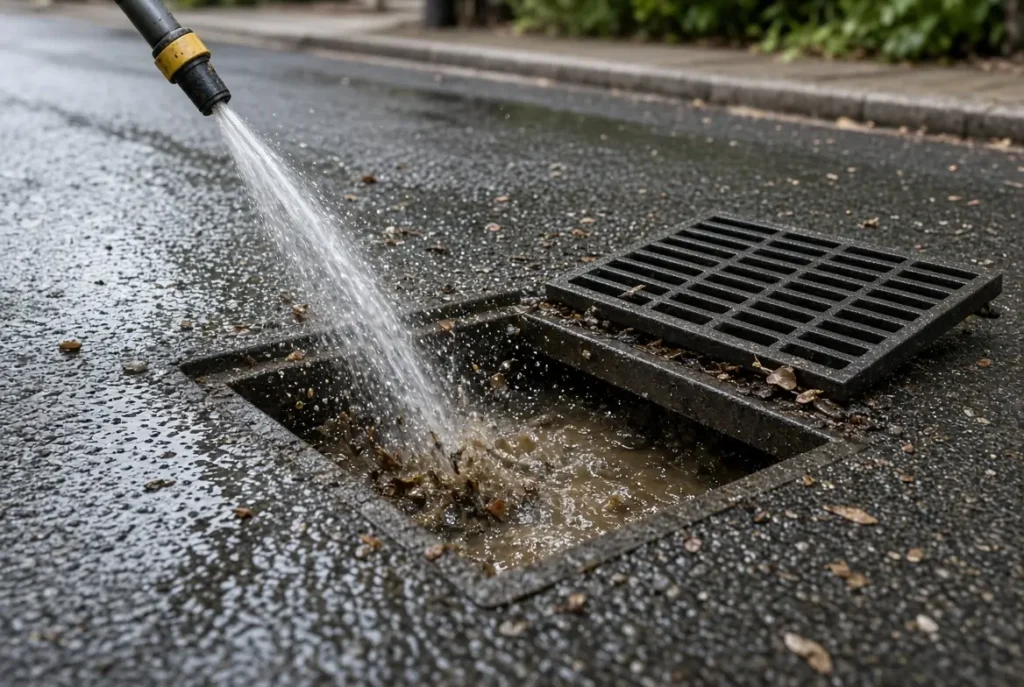
What About Using a Pressure Washer?
Pressure washing can be effective for certain drainage problems, but it needs to be used carefully.
High-pressure water can remove stubborn buildup and sediment, but you need to know whether the pipe is structurally sound.
If the pipe is already damaged, forcing high-pressure water through it may not solve the underlying problem.
Professional equipment also gives a technician more control over the cleaning process and allows them to determine whether additional inspection is necessary.
A Simple DIY vs. Professional Break-Even Calculator
Homeowners can use this simple calculation to determine whether DIY cleaning is actually saving money.
Step 1: Add Your DIY Costs
Tools: $____
Safety equipment: $____
Cleaning supplies: $____
Equipment rental: $____
Gas/transportation: $____
Estimated value of your time: $____
Potential replacement parts: $____
DIY Total:
$________
Now compare that number with a professional estimate.
Step 2: Add the Professional Cost
Professional cleaning: $____
Diagnostic/service fee: $____
Additional equipment: $____
Other approved charges: $____
Professional Total:
$________
Step 3: Compare the Two
DIY Total − Professional Total = $________
If DIY saves you $20 but requires four hours of work, buying equipment, getting dirty, and taking on the risk of damaging the drainage system, the professional option may actually be the better value.
On the other hand, if you can clear a visible blockage in 20 minutes with equipment you already own, paying for professional service may not make sense.
Don’t Forget the Cost of Your Time
This is one of the biggest things homeowners leave out of a DIY calculation.
Suppose you spend:
- 30 minutes buying supplies
- 30 minutes preparing
- 2 hours cleaning
- 30 minutes cleaning your equipment
That’s 3.5 hours.
If you value your time at $30 per hour, you’ve already invested approximately $105 of your time.
Add $40 in supplies and you’re effectively at $145.
A professional quote that looks expensive at first may suddenly look much more reasonable.
What About Damage Costs?
This is where DIY can become much more expensive.
If a homeowner accidentally damages a drain cover, pipe, fitting, or other component, the cost of repair can exceed the original savings.
There is also the possibility of spending money on tools only to discover that the blockage is deeper than expected.
Professional cleaning doesn’t eliminate every risk, but an experienced technician should be able to identify when a simple cleaning isn’t enough.
5 Common Storm Drain Questions Grand Rapids Homeowners Ask
1. Why Does My Storm Drain Keep Backing Up After Heavy Rain?
Heavy rainfall can overwhelm drainage systems, but repeated backups can also indicate a blockage or restriction inside the drainage line.
Leaves, sediment, debris, roots, or damaged pipe sections can prevent water from moving quickly enough.
If the same drain backs up repeatedly after storms, don’t assume another surface cleaning will permanently solve it.
2. Can I Clean the Storm Drain in Front of My Grand Rapids Home Myself?
You can usually remove visible leaves and debris from an accessible drain opening as part of routine maintenance.
However, you should first determine whether the drain is actually a private drainage facility or part of a public system.
Grand Rapids distinguishes private stormwater facilities from city infrastructure, and its ordinances place maintenance responsibilities for private stormwater facilities on property owners.
If you’re unsure what system the drain belongs to, check before performing work beyond basic surface debris removal.
3. How Much Does Storm Drain Cleaning Cost in Grand Rapids?
There isn’t one price that applies to every property.
A simple blockage that can be reached easily may cost much less than a deep obstruction requiring specialized equipment or inspection.
The pipe size, blockage type, accessibility, equipment, labor time, and condition of the drainage system can all affect the final price.
4. Should I Have My Storm Drain Camera Inspected?
A camera inspection can be particularly useful when a blockage keeps returning or the source of the problem isn’t obvious.
It can help identify problems such as roots, buildup, pipe damage, or an obstruction farther down the line.
You may not need a camera for every basic cleaning, but recurring problems are a good reason to ask whether an inspection makes sense.
5. Is a Clogged Storm Drain Responsible for Water in My Basement?
It can be one possible contributor, but basement water doesn’t automatically mean the storm drain is clogged.
Grand Rapids specifically addresses the relationship between groundwater, footing drains, stormwater, and basement sewer backups. In some areas, excess stormwater and groundwater entering sanitary sewers can contribute to basement backups.
If water is entering your basement, the drainage problem should be properly diagnosed rather than assuming that cleaning one storm drain will solve it.
What Should You Ask Before Hiring a Storm Drain Cleaner?
Before agreeing to the work, ask:
- What is causing the blockage?
- Is the quoted price for cleaning only?
- Is a camera inspection included?
- Will additional equipment cost extra?
- Could roots or sediment increase the price?
- Will I be contacted before additional work is performed?
- Is the drain on private property or part of a public drainage system?
Getting these answers upfront makes it much easier to compare estimates.
When Is Professional Storm Drain Cleaning the Better Value?
Professional cleaning generally makes more sense when the problem is underground, recurring, difficult to access, or causing significant water buildup.
It’s especially worth considering when you don’t have the equipment necessary to safely investigate the blockage.
The goal isn’t necessarily to spend money on a professional every time you see leaves around a drain.
It’s to recognize when the problem has moved beyond basic homeowner maintenance.
How to Save Money on Storm Drain Cleaning
You can reduce the chance of expensive drainage problems by performing simple maintenance throughout the year.
Keep leaves and grass clippings away from storm drains.
Don’t sweep yard waste into the street.
Clean visible debris before major storms when it can be done safely.
Watch for standing water.
Pay attention to drains that become slower over time.
Grand Rapids specifically recommends keeping catch basins clear and avoiding putting yard waste and other materials into storm drains.
These simple steps can help reduce the amount of debris entering the drainage system.
DIY or Professional Storm Drain Cleaning?
DIY storm drain cleaning is usually best for simple, visible debris that you can safely remove from an accessible drain.
Professional cleaning becomes more worthwhile when the blockage is underground, recurring, difficult to access, or potentially caused by roots, sediment, or pipe damage.
Don’t compare DIY and professional cleaning based only on the price of the service.
Compare:
- Tools
- Equipment
- Your time
- Safety gear
- Difficulty
- Risk of damage
- Whether the problem will actually be fixed
A $50 DIY job isn’t necessarily cheaper if it takes four hours and the drain still backs up the next time it rains.
Likewise, you don’t necessarily need to hire a professional every time leaves collect around a storm drain.
Know where the problem is, understand what the job requires, and then choose the option that gives you the best combination of cost, safety, and results.