
Does Your House Smell Like Sewage?
A persistent sewage smell can be caused by a dry drain trap, clogged drain, plumbing vent problem, damaged sewer pipe, or another drainage issue. If the odor keeps coming back, a professional inspection can help find the source before it turns into a bigger plumbing problem.
Call 844-423-0056A sewage smell inside your home is more than an unpleasant nuisance. That rotten-egg or sewer-like odor can mean sewer gas is entering the house through a dry drain trap, plumbing problem, clogged drain, damaged sewer pipe, or another opening in the drainage system.

Fortunately, the cause isn’t always a major sewer repair. Some sources are relatively simple to correct. The challenge is figuring out where the odor is coming from and why it is getting into the house.
If you’ve been wondering, “Why does my house smell like sewage?” here’s what homeowners should know.
Why does my house smell like sewage?
Therefore, a sewage smell typically means sewer gas is escaping somewhere it shouldn’t.
Your home’s plumbing system is designed to keep sewer gases outside. Drain traps hold water that creates a barrier between your living space and the sewer system. Plumbing vents also help control air pressure and safely direct gases outside.
When something interferes with that system, sewer odors can enter your home.
Common causes include:
- A dry floor drain trap
- An unused sink or shower
- A clogged or partially clogged drain
- A damaged toilet seal
- A blocked plumbing vent
- A broken or leaking drain pipe
- A damaged sewer line
- A sump pit or floor drain problem
- A loose plumbing connection
The location of the odor can provide an important clue.
Why does my house smell worse in the basement?
Basements are particularly susceptible to sewage odors because many homes have floor drains, utility sinks, laundry drains, sump pits, and other plumbing connections located downstairs.
One of the most common causes is a dry floor drain trap.
A floor drain that isn’t used regularly can eventually lose the water inside its trap. Once that water evaporates, there’s no longer an effective barrier between the basement and the drainage system.
Sewer gases can then move through the drain opening and into the basement.
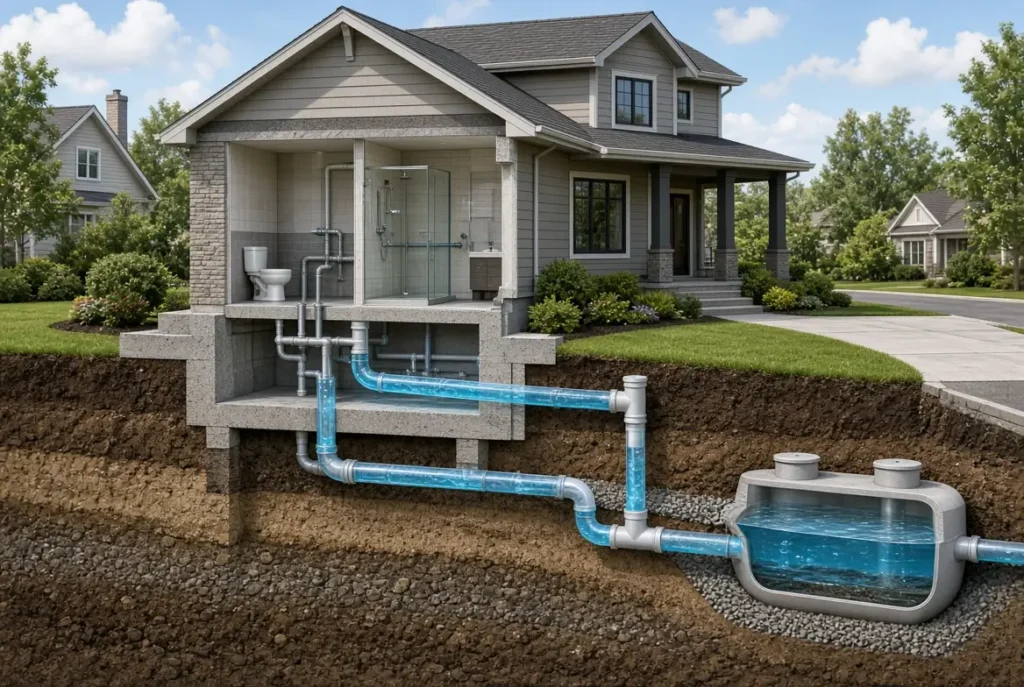
Basements can also smell worse when there is a problem with:
- A floor drain
- A basement bathroom
- A sewage ejector system
- A laundry drain
- A cracked drain pipe
- The home’s main sewer line
If the odor is strongest around a basement floor drain, start there.
Why does my bathroom smell like sewer gas?
A bathroom sewer smell can come from several different sources.
The most common possibilities include a dry trap, toilet seal problem, clogged drain, or plumbing vent issue.
Check the bathroom’s:
- Toilet
- Sink
- Shower drain
- Bathtub drain
- Floor drain, if present
If a bathroom isn’t used frequently, its traps can dry out.
A toilet can also develop an odor problem if the seal between the toilet and the drain connection is damaged or deteriorated. In that situation, sewer gases may escape around the base of the toilet.
If the smell is strongest around the toilet rather than the drain, that’s an important clue.
Why does the sewage smell come and go?
A sewage odor that disappears and returns can be especially frustrating.
However, intermittent smells often provide useful information.
The odor may come and go because of:
- Changes in temperature
- Changes in air pressure
- Wind
- Plumbing system pressure
- Water evaporating from a trap
- A drain that is only partially blocked
- Increased wastewater use
- Changes in groundwater or sewer conditions
For example, a partially clogged drain may not produce a noticeable odor all day. When water or air pressure changes inside the pipe, sewer gases can be pushed toward the house.
Similarly, a floor drain may smell worse after sitting unused for several weeks because the water in the trap has evaporated.
An intermittent odor is still worth investigating if it keeps returning.
Why does my house smell like sewage after it rains?
Heavy rain can sometimes make an existing plumbing or sewer problem much more noticeable.
During significant rainfall, municipal sewer systems can experience increased flow. Groundwater can also affect damaged or compromised underground sewer pipes.
If your home’s sewer line has cracks, separated joints, or other defects, outside water may enter the system. Changes in pressure and flow can make existing sewer odors more noticeable.
Rain can also expose problems with:
- Basement floor drains
- Sump systems
- Sewer clean outs
- Damaged sewer lines
- Poorly sealed plumbing connections
If your basement consistently develops a sewage smell after heavy rain, don’t automatically assume the rain itself is the cause. It may simply be making an existing plumbing problem easier to notice.
Could a dry floor drain trap cause the smell?
Yes. A dry floor drain trap is one of the simplest and most common causes of sewer odors in basements and utility areas.
The trap is designed to hold water inside the drain pipe. That water acts as a barrier against sewer gases.
When a drain isn’t used regularly, the water can evaporate.
This can happen particularly quickly in:
- Dry basements
- Heated utility rooms
- Guest bathrooms
- Floor drains that are rarely used
- Seasonal properties
If the smell is coming directly from an unused floor drain, adding water to the trap may restore the barrier.
Some homeowners also use a small amount of mineral oil after adding water to help slow evaporation, but recurring odor should still be investigated rather than repeatedly masking the symptom.
Can a clogged drain cause a sewage smell?
Yes. A clogged or partially clogged drain can contribute to sewage odors.
A blockage can trap organic material inside the pipe. As that material sits and breaks down, it can produce unpleasant odors.
A partial blockage can also interfere with normal drainage and airflow.
You may notice:
- Slow drainage
- Gurgling
- Bubbling
- Standing water
- Recurring clogs
- Sewer-like odors
If the smell is accompanied by slow drainage, the blockage becomes a more likely suspect.
A drain doesn’t have to be completely blocked to cause a problem.
Could a broken sewer line cause the odor?
Yes.
A damaged sewer line can allow wastewater and sewer gases to escape into areas where they don’t belong.
Depending on where the damage occurs, you might notice the odor:
- Inside the basement
- Around a floor drain
- Near a clean out
- Outside in the yard
- Near the foundation
- In multiple bathrooms
A broken or damaged sewer line may also cause recurring backups, slow drains, unusually wet areas of the yard, or sewage surfacing outdoors.
Older sewer lines can be particularly vulnerable to problems caused by deteriorated pipes, separated joints, or tree-root intrusion.
Could tree roots cause a sewage smell?
Tree roots can enter damaged sewer pipes through cracks or joints.
Once inside, roots can catch toilet paper and other debris flowing through the line. This can gradually create a larger blockage.
A root-related sewer problem may produce several symptoms at once:
- Repeated toilet clogs
- Slow drains
- Gurgling toilets
- Sewer odors
- Recurring backups
- Problems that return after temporary drain cleaning
If your plumbing problem keeps coming back after being cleared, the underlying pipe may need to be inspected.
How can I tell if it’s sewer gas or something else?
Not every bad smell in a house comes from the sewer.
A sewage odor is often described as:
- Rotten eggs
- Sulfur-like
- Foul or wastewater-like
- Musty and sewage-like
But other household problems can create similar odors.
For example, a dead animal, mold, stagnant water, garbage, or certain plumbing materials can produce unpleasant smells.
Pay attention to where the odor is strongest.
If the smell is concentrated around a drain, toilet, floor drain, or plumbing fixture, a plumbing-related source becomes more likely.
If the odor appears near electrical equipment, appliances, walls, or other non-plumbing areas, don’t automatically assume it’s sewer gas.
What is sewer gas?
Sewer gas is a mixture of gases that can be produced by decomposing waste in plumbing and sewer systems.
One of the gases associated with sewer odors is hydrogen sulfide, which has a characteristic rotten-egg smell.
Sewer gas shouldn’t be allowed to enter your living space. If you have a strong or persistent sewage odor indoors, particularly if you experience symptoms such as dizziness, nausea, headache, or difficulty breathing, leave the area and seek appropriate professional assistance.
Don’t intentionally investigate a suspected sewer gas source by putting your face near a drain or enclosed plumbing area.
Why does my toilet smell like sewage even after cleaning it?
If you’ve thoroughly cleaned the toilet but the sewage smell remains, the source may not be the bowl itself.
Possible causes include:
- A deteriorated toilet seal
- A partially blocked drain
- A plumbing vent problem
- A nearby dry trap
- A leak around the toilet connection
- A problem farther down the sewer line
If the odor is strongest around the base of the toilet, that deserves particular attention.
A toilet that rocks slightly or has moisture around its base may have a problem with its connection to the drain.
Can a blocked plumbing vent cause sewer odors?
Yes.
Plumbing vents allow air to move through the drainage system and help prevent pressure problems.
If a vent becomes blocked, the drainage system may not operate correctly.
A blocked vent can contribute to:
- Gurgling toilets
- Slow drains
- Sewer odors
- Bubbling fixtures
- Poor toilet flushing
Vent problems can be difficult to diagnose because the obstruction may be located above the roof or somewhere inside the plumbing system.
Why does the smell seem strongest when I run water?
Running water changes the pressure and airflow inside your plumbing system.
If there is a partial blockage, vent problem, or other drainage issue, using a sink, shower, washing machine, or toilet can cause air to move through the pipes differently.
That can temporarily push sewer odors into the house.
If flushing the toilet or running the washing machine consistently triggers the smell, make note of it. That information can help a professional determine where to look.
When should I call a drain or sewer professional?
You should consider professional drain or sewer service when the smell is persistent, keeps returning, or occurs alongside other plumbing symptoms.
Call for help if you notice:
- Repeated sewage odors
- Multiple slow drains
- Gurgling toilets
- Frequent toilet clogs
- Water backing up into tubs or showers
- Sewage around a floor drain
- Sewage odors after rainfall
- Wet or unusually green areas above a sewer line
- Recurring sewer problems after drain cleaning
- A suspected broken sewer pipe
The combination of symptoms is often more important than the smell alone.
A sewage odor accompanied by slow drainage and gurgling, for example, is more concerning than an isolated odor from a dry basement drain.
Can I fix a sewage smell myself?
Some simple causes can be addressed by homeowners.
If you suspect a dry trap, adding water to an unused drain may restore the water barrier.
You can also clean accessible drain covers and remove obvious debris.
However, don’t assume the problem is solved simply because the smell temporarily disappears.
If the odor returns, there’s probably an underlying reason.
A recurring sewage smell can indicate a drainage, vent, toilet seal, or sewer-line problem that requires a more thorough inspection.
Don’t just cover up a sewage smell
Air fresheners and drain deodorizers may make a room smell better temporarily, but they don’t solve the source of the odor.
If sewer gas is entering your home, the goal should be to determine why the plumbing system isn’t keeping it out.
Fixing the source is much better than repeatedly covering up the smell.
Don’t Live With The Sewer Smell
A sewage smell inside your house isn’t something you should simply live with.
Sometimes the solution is straightforward, such as restoring water to a dry floor drain trap. Other times, the odor can be an early warning sign of a partial drain blockage, plumbing vent problem, damaged toilet seal, or developing sewer-line issue.
Start by identifying where the smell is strongest and when it occurs. Could it originate from a basement floor drain? Does it appear after rain? Does running the washing machine trigger it? When does the toilet gurgle at the same time?
Those details can help narrow down the source.
If the smell keeps returning, becomes stronger, or is accompanied by slow drains, gurgling, backups, or other plumbing problems, it’s time to have the drainage system investigated rather than waiting for a sewage backup to reveal the problem.