
Tired of Dealing With Slow or Clogged Drains in Denver?
Don’t wait until a minor drain clog turns into a major plumbing emergency. Our experienced drain cleaning specialists can quickly diagnose the problem and restore proper flow to your drains.
Call 844-423-0056 NowFast Service • Drain Cleaning • Sewer Line Inspections • Emergency Assistance

If it feels like you’re constantly dealing with slow drains, standing water, or recurring drain backups in your Denver home, you’re not imagining things. Many homeowners throughout Denver experience frequent drain clogs due to a combination of aging plumbing systems, hard water, seasonal debris, and everyday household habits.
While an occasional clog is normal, repeated drain problems are often a sign of a larger issue that should be addressed before it turns into a costly plumbing repair.
In this guide, we’ll explain why drains clog more often in Denver homes, what causes recurring blockages, and what homeowners can do to keep their plumbing system flowing properly.
Denver’s Aging Plumbing Infrastructure
One major reason drains clog more frequently in Denver is the age of many residential plumbing systems.
Denver has thousands of homes that were built decades ago. Older homes often contain plumbing materials that are more susceptible to buildup and deterioration. Cast iron drain lines, galvanized pipes, and aging sewer systems can develop rough interior surfaces over time.
These rough surfaces create ideal conditions for debris to accumulate, including:
- Grease
- Soap residue
- Hair
- Food particles
- Mineral deposits
- Toilet paper buildup
As the inside diameter of the pipe becomes smaller, clogs occur more frequently.
If your home was built before the 1980s, recurring drain problems may indicate that your plumbing system needs professional inspection.
Hard Water Causes Hidden Drain Buildup
Denver is known for having moderately hard water.
Hard water contains minerals such as calcium and magnesium. Over time, these minerals can accumulate inside plumbing pipes and drains.
Unlike a sudden blockage caused by a foreign object, mineral buildup develops slowly. Homeowners may notice:
- Slower draining sinks
- Reduced water flow
- Frequent kitchen drain clogs
- Soap scum accumulation
- Increased plumbing maintenance
The combination of hard water deposits and everyday debris can significantly restrict drain capacity.
Many homeowners assume a clog is caused by hair or grease alone when mineral buildup is actually contributing to the problem behind the scenes.
Kitchen Drains Are Common Trouble Spots
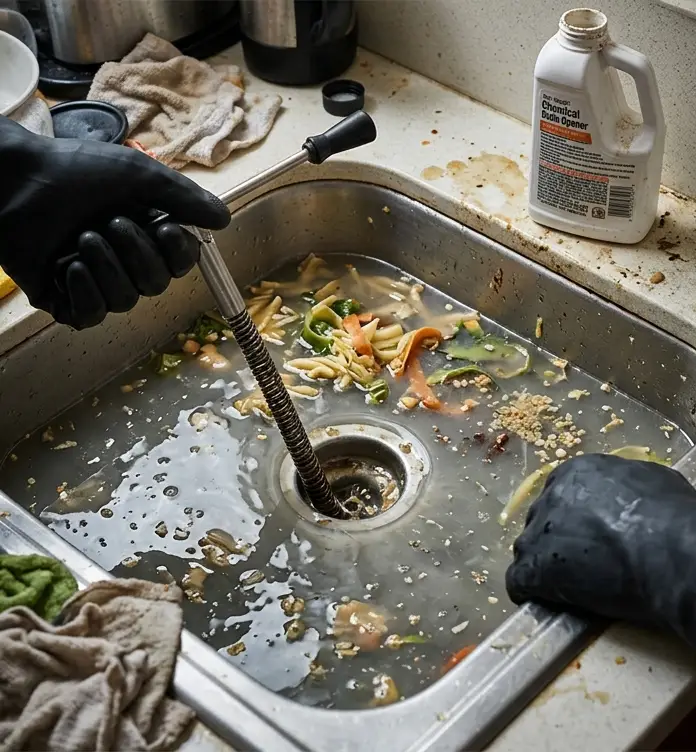
Kitchen sinks are among the most frequently clogged drains in Denver homes.
Many homeowners unknowingly send materials down the drain that eventually create stubborn blockages.
Common culprits include:
- Cooking grease
- Bacon fat
- Coffee grounds
- Rice
- Pasta
- Eggshells
- Food scraps
Although some materials may appear harmless initially, they can stick to pipe walls and collect additional debris over time.
Grease is especially problematic because it cools and hardens inside drain lines.
Once grease buildup forms, it acts like glue for food particles and other debris.
If your kitchen sink drains slowly, professional cleaning may be necessary before a complete blockage occurs.
Bathroom Drains Experience Constant Wear
Bathroom drains handle a surprising amount of material every day.
Hair is one of the biggest causes of drain clogs in Denver bathrooms. Hair combines with soap residue and toothpaste to create dense obstructions that restrict water flow.
Common bathroom drain issues include:
Shower Drain Clogs
Long hair, pet hair, and soap scum frequently collect in shower drains.
Bathroom Sink Blockages
Toothpaste, shaving cream, and grooming products contribute to buildup.
Bathtub Drain Problems
Bath oils, soaps, and hair often create recurring clogs.
Many homeowners rely on chemical drain cleaners for temporary relief. Unfortunately, these products rarely remove the entire blockage and can sometimes damage older plumbing systems.
Tree Roots Are a Major Denver Sewer Problem
Another reason drains clog more often in Denver homes is tree root intrusion.
Mature trees throughout Denver neighborhoods continuously search for moisture. Even tiny cracks in underground sewer lines can attract roots.
Once roots enter a sewer pipe, they continue growing and collecting debris.
Common warning signs include:
- Multiple drains backing up simultaneously
- Gurgling toilets
- Sewer odors
- Slow drains throughout the home
- Frequent sewer line clogs
Tree roots are one of the leading causes of recurring sewer backups in older Denver neighborhoods.
Professional sewer camera inspections can quickly identify root intrusion before major damage occurs.
Seasonal Changes Affect Drain Performance
Denver’s changing weather patterns can also contribute to drain issues.
Throughout the year, temperature fluctuations impact plumbing systems.
Spring can introduce:
- Excess debris
- Increased groundwater
- Root growth activity
Fall often leads to:
- Leaf accumulation
- Outdoor drain blockages
- Increased sewer line debris
Winter presents its own challenges as freezing temperatures can affect drainage and expose existing plumbing weaknesses.
Regular maintenance helps prevent seasonal issues from becoming plumbing emergencies.
Flushing the Wrong Items Creates Recurring Clogs
Many homeowners unknowingly create drain problems by flushing products that should never enter the plumbing system.
Even products labeled “flushable” can contribute to blockages.
Avoid flushing:
- Baby wipes
- Paper towels
- Feminine hygiene products
- Cotton swabs
- Dental floss
- Cleaning wipes
- Excessive toilet paper
These materials do not break down as easily as toilet paper and can become trapped inside sewer lines.
Over time, they combine with grease and debris to form significant obstructions.
Signs Your Drain Problem Is Getting Worse
Some drain issues begin as minor inconveniences but eventually develop into larger plumbing concerns.
Watch for these warning signs:
Frequent Drain Backups
If the same drain keeps clogging, there is likely an underlying issue deeper within the line.
Multiple Slow Drains
When several drains throughout the home are affected, the problem may involve the main sewer line.
Bad Odors
Persistent sewer odors often indicate trapped waste or sewer line problems.
Water Backing Up in Other Fixtures
If running water in one fixture causes water to appear elsewhere, immediate professional attention is recommended.
These symptoms typically indicate more than a simple surface-level clog.
How Professional Drain Cleaning Helps
Professional drain cleaning removes buildup that standard plungers and store-bought products cannot reach.
A professional plumber can:
- Clear grease accumulation
- Remove hair blockages
- Eliminate root intrusion
- Clean pipe walls
- Inspect sewer lines
- Identify developing plumbing problems
Routine maintenance often prevents emergency plumbing calls and extends the lifespan of your drain system.
Homeowners experiencing recurring drain issues should consider scheduling preventative cleaning before a major blockage occurs.
For homeowners dealing with recurring Denver drain clogs, professional drain cleaning can often restore proper flow and prevent future backups.
Preventing Future Drain Clogs
While some drain problems are unavoidable, homeowners can significantly reduce the likelihood of clogs by following a few simple practices.
Use Drain Screens
Drain screens catch hair and debris before they enter plumbing lines.
Dispose of Grease Properly
Allow grease to cool and place it in the trash rather than pouring it down the sink.
Schedule Regular Maintenance
Professional drain inspections help identify developing issues early.
Avoid Chemical Drain Cleaners
These products rarely solve underlying problems and may damage older pipes.
Monitor Slow Drains
Address minor drainage issues before they become major blockages.
Call a Professional Before a Small Clog Becomes a Big Problem
Drain clogs are one of the most common plumbing issues facing Denver homeowners. Between aging pipes, hard water deposits, tree root intrusion, grease buildup, and everyday usage, it’s easy to see why drains clog more often than many people realize.
The good news is that early intervention can prevent expensive repairs and major sewer backups. If you’re noticing slow drains, recurring clogs, or signs of a developing blockage, professional drain cleaning can restore proper drainage and help protect your plumbing system.
Learn more about our drain cleaning services by visiting our Denver service area page or exploring additional resources on our website. Taking action early can save time, money, and frustration down the road.