
Still Dealing With Sewer Backups in Atlanta?
If your drains keep slowing down or backing up, the issue is likely deeper than a basic clog. Get it checked before it turns into a full sewer failure.
Call 844-423-0056 NowIf your sewer line in Atlanta keeps backing up, it’s not “bad luck” or a one-time clog that just won’t go away. It’s usually a sign that something deeper is going wrong underground.

And in Atlanta, that “something deeper” is often a mix of aging pipes, tree root intrusion, and soil movement that slowly destroys sewer systems from the outside in.
Most homeowners don’t realize it until they’re dealing with repeat backups. At that point, the system isn’t just clogged—it’s compromised.
Here’s what’s really happening when your sewer line keeps failing.
Repeated backups mean the main line is struggling
A single slow drain is one thing. But when toilets, tubs, and floor drains all start acting up at the same time, that points directly to the main sewer line.
That line is responsible for carrying everything from your home out to the city connection. When it starts failing, every fixture in the house feels it.
Common signs include:
- Toilets bubbling when sinks drain
- Water backing up in shower drains first
- Gurgling noises after flushing
- Multiple drains slowing down together
- Sewage smell coming from basement or yard drains
If you’re seeing more than one of these, you’re not dealing with a surface-level clog. You’re dealing with a restriction or damage in the main line.
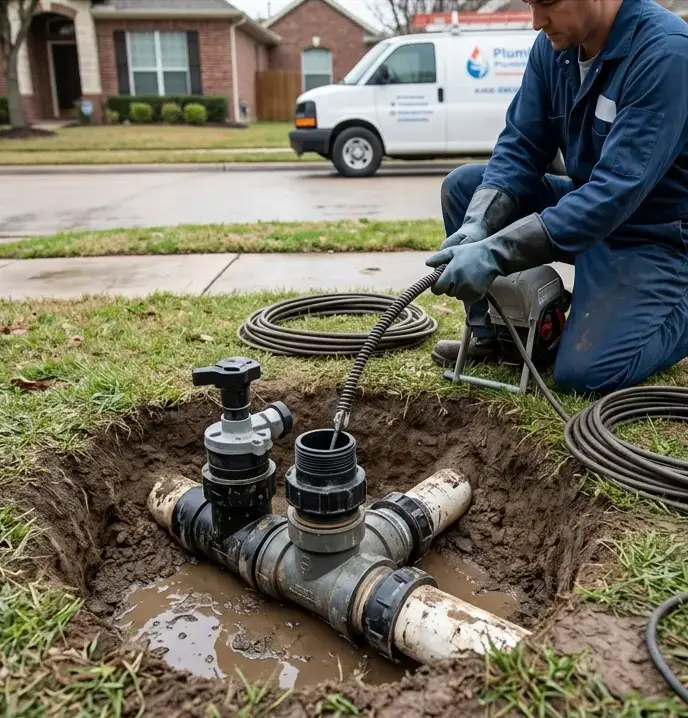
Atlanta’s biggest problem: tree roots don’t stop growing
One of the biggest reasons sewer issues repeat in Atlanta is tree root invasion.
This city is heavily wooded, and that’s great for shade—but not great for underground plumbing.
Tree roots naturally grow toward moisture, and sewer lines are basically an open invitation. Even a hairline crack or slightly loose joint gives roots access.
Once inside, they expand quickly and create a net-like blockage that catches everything flowing through the pipe.
What starts as a small intrusion turns into:
- Constant clogs in the same line
- Increasingly slow drainage across the house
- Full sewer backups during heavy water use
- Recurring service calls that only provide temporary relief
Snaking the line may clear the immediate blockage, but it doesn’t remove the root system. That’s why the problem keeps coming back.
Until the pipe is repaired or replaced, the roots always return.
Grease buildup slowly narrows the pipe
Another major factor in Atlanta Georgia sewer backups is grease and waste buildup.
Most people don’t realize how much damage kitchen waste causes over time.
When grease goes down the drain, it doesn’t stay liquid. It cools, hardens, and sticks to the pipe walls. Layer by layer, the pipe gets narrower.
Then it starts trapping:
- Coffee grounds
- Food particles
- Soap scum
- Paper products that don’t break down well
The result is a slow choke effect. Water still moves—but not fast enough. Eventually, the system can’t keep up with normal household use.
This is why backups often appear “out of nowhere.” In reality, the blockage has been forming for months or even years.
Shifting Georgia soil is breaking pipes underground
Atlanta’s soil plays a bigger role in sewer issues than most people think.
The region’s clay-heavy ground expands when wet and shrinks when dry. That constant movement puts pressure on underground piping systems.
Over time, that movement causes:
- Pipe joints to separate slightly
- Sections of pipe to sag or belly
- Cracks to form in older materials
- Misalignment between pipe segments
A sagging pipe is especially problematic because waste no longer flows smoothly. Instead, solids collect in low points and build up over time.
That’s when recurring backups start—because the pipe is physically trapping waste instead of moving it out.
Older homes = older sewer systems
Many homes in Atlanta still rely on original sewer lines that are decades old.
Depending on what material was used, those pipes may already be past their effective lifespan.
Typical sewer pipe lifespans:
- Clay: prone to cracking and root intrusion over time
- Cast iron: corrodes from the inside out
- Older PVC or early plastic systems: may have weak joints or poor installation
Once these systems start breaking down, problems don’t stay isolated. You start getting repeat issues in different areas of the home.
That’s why some homeowners feel like they’re “always dealing with a clog.” In reality, the pipe itself is deteriorating.
Heavy rain exposes weak sewer systems
Atlanta storms can overwhelm already weakened sewer systems very quickly.
When heavy rain hits, several things happen at once:
- Ground saturation increases pressure around pipes
- Small cracks allow water infiltration
- Municipal systems back up under high demand
- Existing blockages become fully overwhelmed
If your sewer line already has partial blockage or structural damage, rain is often what triggers a full backup.
That’s why many homeowners notice problems after storms—it’s not the rain causing the issue, it’s revealing the failure that was already there.
Why the same clog keeps coming back
If you’ve had your line cleared and the problem returns, that’s a strong indicator the issue is not just debris.
Recurring backups usually come down to one of these:
- Root intrusion that wasn’t fully removed
- Pipe collapse or severe sagging
- Heavy grease buildup deep in the line
- Misaligned pipe sections trapping waste
In each case, cleaning the line only provides temporary relief. The structure of the system is still broken.
That’s why repeat service calls often feel like a cycle—they are treating symptoms, not the cause.
The real meaning behind sewer backups
When a sewer line keeps backing up in Atlanta, it usually means one thing: the system is failing at a structural level.
Not just clogged.
Not just slow.
Failing.
And once that starts happening, it rarely fixes itself.
It typically means:
- The pipe is damaged or collapsing
- Roots are actively regrowing inside the line
- Flow is permanently restricted by buildup or sagging
At that stage, ongoing cleaning is not a long-term solution.
What you should do before it gets worse
The biggest mistake homeowners make is waiting for a full blockage before taking action.
By the time sewage is backing into the home, the damage is already advanced.
A proper camera inspection can show exactly what’s going on:
- Root locations inside the pipe
- Cracks or breaks in the line
- Blocked or sagging sections
- Full collapse points
Without that, every fix is guesswork.
And guesswork gets expensive fast.
What sewer line backups mean for Atlanta
A sewer line that keeps backing up in Atlanta isn’t random. It’s the result of long-term pressure from roots, soil movement, buildup, and aging infrastructure all working against the same system.
The problem usually doesn’t get better on its own—it escalates until the damaged section is repaired or replaced.
If you’re dealing with repeated backups, you’re past the “clean it and forget it” stage. The system is telling you something is structurally wrong underground.
Still Dealing With Sewer Backups in Atlanta?
If your drains keep slowing down or backing up, the issue is likely deeper than a basic clog. Get it checked before it turns into a full sewer failure.
Call 844-423-0056 Now