Dealing With a Drain Problem in Brownstown WA?
If your drains keep slowing down or backing up after being “cleared,” there’s usually something deeper going on in the line. This isn’t random — it’s buildup, blockage, or a sewer issue that keeps getting missed.
Call Now: 844-423-0056

Most homeowners in Brownstown don’t call for drain cleaning the first time something slows down.
They wait.
They try hot water. Then a plunger. Then maybe a store-bought drain cleaner.
By the time we get called out, the situation is usually the same story: the drain “worked again for a bit,” then failed again a few days later.
That pattern is the key detail most people miss.
If you’re dealing with drain cleaning Brownstown WA, the real issue usually isn’t the clog you can see — it’s what’s still stuck inside the pipe after the water starts moving again.
And in this area, that buildup comes back fast.
What We Usually Find in Brownstown Drain Calls
When we open a line in Brownstown, it’s rarely a clean break situation.
It’s almost always a combination of buildup layers.
Here’s what shows up most often:
1. Grease That Has Turned into a Solid Wall
Kitchen drains are the worst offenders.
It doesn’t matter if you “don’t pour grease down the sink.”
We still find it.
It comes from:
- Dishwater
- Cooking residue
- Pan rinsing
- Food scraps breaking down over time
Inside the pipe, that grease cools and hardens. Then it starts acting like glue for everything else going down the line.
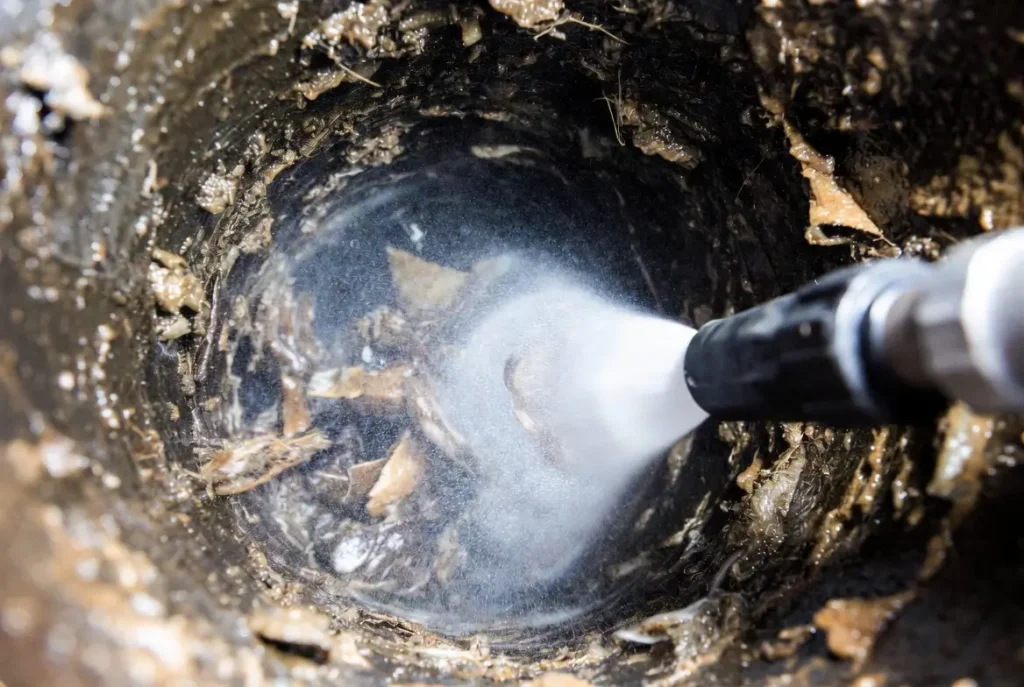
After enough time, the pipe isn’t really a pipe anymore — it’s a narrowed tunnel coated in hardened sludge.
That’s why the drain works… until it doesn’t.
2. Basement Drain Sludge That Nobody Sees
In a lot of Brownstown homes, the basement floor drain is the first warning sign.
We’ll show up and find:
- Water sitting around the drain
- A sour sewer smell
- Slow movement after laundry use
- Gurgling when toilets flush upstairs
That drain is basically telling you the main line is struggling.
What’s actually happening is the lowest point in the system is getting pressure pushed back at it.
Most people think the basement drain is the problem.
It usually isn’t.
It’s just where the system gives up first.
3. Roots That Don’t Announce Themselves
This is the quiet one.
No smell. No warning. Just slow change over time.
Tree roots enter tiny cracks in underground sewer lines and start growing inside the pipe.
At first it’s minor.
Then it becomes a net that catches:
- Toilet paper
- Waste
- Debris
- Grease
Once that happens, you don’t get a clean drain anymore. You get a system that slowly chokes itself.
We see this a lot in older pockets around Brownstown where trees are mature and sewer lines are original or partially replaced.
4. The “It Keeps Coming Back” Problem
This is the most common call pattern:
- Drain backs up
- It gets snaked
- It works again
- Then it comes back
That cycle usually means one thing:
The blockage was never fully removed.
Snaking punches a hole through the clog. It doesn’t clean the pipe walls.
So the remaining buildup just collapses back into place over time.
That’s why repeat clogs are such a strong signal that something deeper is happening.
Why Brownstown Homes Run into This So Often
This isn’t random.
There are a few local realities that make drain issues more common here:
Older pipe systems in residential areas
A lot of homes still rely on aging sewer materials that rough up internally over time.
Heavy seasonal water shifts
When the ground shifts with weather changes, pipe alignment can be affected slightly — enough to catch debris.
Tree-heavy neighborhoods
Roots don’t care about property lines. They go wherever moisture is.
High kitchen usage homes
More cooking = more grease load = faster buildup inside drain lines.
Put all that together, and you get systems that slowly narrow over time without obvious failure points.
The Part Most People Don’t Realize
Drain problems don’t “clear themselves.”
If anything, they stabilize temporarily.
That’s why people think the issue is gone… until the next backup hits harder.
What’s really happening is:
- Water finds a temporary path
- Buildup remains on the pipe walls
- Flow slowly degrades again
- Another blockage forms in the same spot
It’s not random. It’s repeat failure in the same system.
That’s why proper drain cleaning matters more than quick clearing.
When It’s No Longer Just a Drain Problem
There’s a point where this stops being a “drain issue” and becomes a system issue.
You’re there if:
- Multiple drains act up at once
- Basement drain reacts to toilet flushing
- You smell sewer gas indoors
- Backups happen after heavy water use
- The same clog keeps returning
At that point, you’re not dealing with one pipe.
You’re dealing with the main line.
That’s where deeper cleaning methods are needed — not just basic clearing.
What Actually Fixes It Long-Term
Real drain cleaning isn’t about pushing water through.
It’s about removing what’s stuck to the pipe walls.
Depending on what’s found, that can involve:
- Mechanical clearing for solid blockages
- High-pressure cleaning for grease and sludge
- Camera inspection to locate root or collapse points
The goal isn’t temporary flow.
It’s restoring the pipe back to its actual diameter.
That’s the difference between “it’s working again” and “it stopped coming back.”
Preventing the Same Problem from Repeating
Once the system is cleared, the goal is simple: don’t let it rebuild the same way.
That comes down to:
- Keeping grease out of kitchen drains
- Watching slow drains early instead of ignoring them
- Avoiding chemical cleaners that only burn holes through buildup
- Treating first signs of basement drain activity seriously
Most repeat issues aren’t bad luck.
They’re delayed maintenance problems.
Don’t have Your Drains Act Up
If your drains in Brownstown are acting up repeatedly, the system is already telling you something:
There’s buildup somewhere that hasn’t been fully removed yet.
That’s why temporary fixes don’t last.
The fix has to match the size of the problem — not just the symptom you’re seeing at the moment.
Once that’s handled correctly, the constant cycle of clog → fix → clog usually stops.
Still Dealing With Drain Problems in Brownstown WA?
If your drains keep slowing down or backing up after being cleared, there’s likely buildup deeper in the line that needs proper cleaning.
What’s happening most in your home — kitchen sink, basement drain, or multiple fixtures at once?
Call Now: 844-423-0056